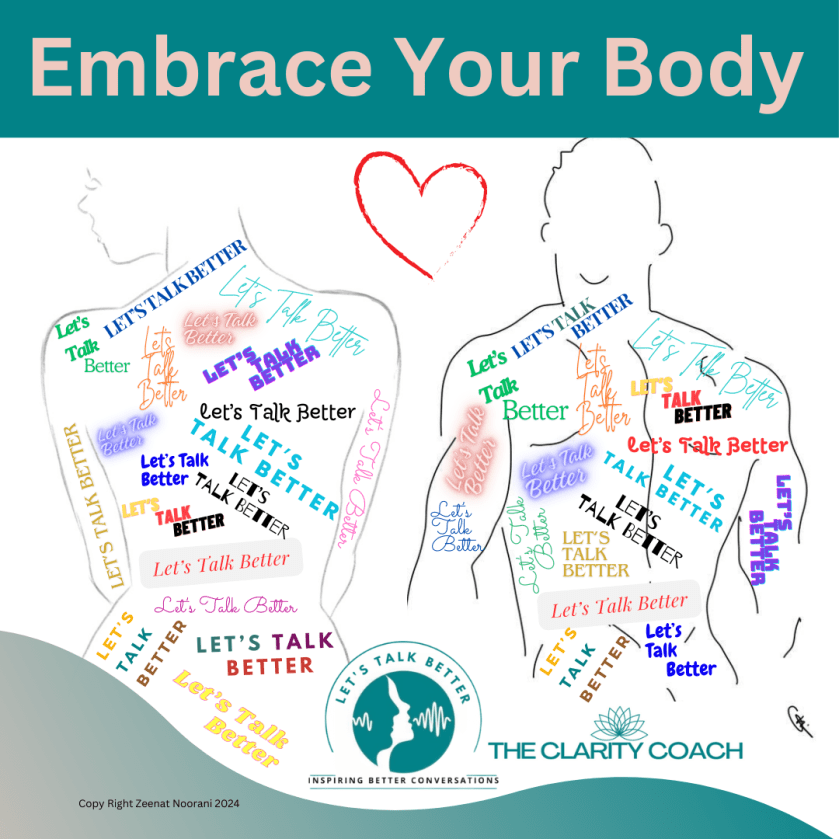
Breaking the Chains of Body Image, Stigmas, and the Path to Embracing Ourselves
The Let’s Talk Better Campaign (LTB) held its quarterly event on November 29th, 2024, on the topic of Body Image – Embrace Yourself, Talking Stigmas & Taboos. During our recent Let’s Talk Better event, we explored some of the challenges we face, especially the younger generation and how we can foster a healthier relationship with our bodies. The discussion shed light on the staggering statistics, reasons behind the rising concerns, and actionable steps to address this growing issue.
Body image has long been a complex and deeply personal aspect of our identity, yet it has become increasingly entangled with societal pressures, unrealistic standards, and taboos that can take a toll on our mental health and wellbeing.
As I write this, I reflect on my own experience of facing the challenges of body image during my career as a professional figure skater. Looking back, this began way back during my primary school days and carried on into my early 40s until one day; I decided to take control and not allow external pressures to impact my decisions and the way I live my life. Ten years on, I am in a better place, though at times, it can be difficult as I know I am dealing with menopause and its challenges. The bonus is, that I now have a different mindset, a set of tools and strategies that help me keep a perspective of what is real. With this, I have the qualifications and a true passion to help support young people to better educate and understand themselves and their bodies to help prevent them from falling prey to societal expectations.
Let’s look at the Current Landscape with Body Image and Young People
Recent studies paint a concerning picture:
- According to a 2023 NHS Digital report, 1 in 3 children and young people aged 11-16 feel dissatisfied with their body image, a significant increase from previous years.
- Social media platforms have been identified as a major influence, with 87% of teens reporting they compare their appearance to edited or filtered images online.
- Body dissatisfaction is now linked to higher rates of depression and anxiety, with the Mental Health Foundation reporting that 61% of young people who struggle with body image also experience significant mental health challenges.
These statistics underline the urgency of addressing the body image crisis, particularly as it continues to escalate among younger generations.
So, Why are Concerns about Body Image increasing?
Several factors contribute to the rise in body image concerns:
- Social Media and Digital Culture: The constant exposure to curated, often unrealistic images on platforms like Instagram and TikTok creates a toxic comparison cycle. Filters and editing tools blur the line between reality and aspiration, leaving young people striving for unattainable perfection.
- Cultural Standards and Media Representation: Narrow definitions of beauty continue to dominate movies, advertisements, and fashion. This reinforces the idea that only certain body types are “worthy” of admiration.
- Bullying and Peer Pressure: Young people frequently face judgment or teasing about their appearance, both online and offline. This not only damages self-esteem but can lead to long-term mental health issues.
- Post-Pandemic Lifestyle Changes: The COVID-19 pandemic disrupted routines, increased sedentary behaviour, and heightened feelings of isolation—factors that compounded body image struggles for many.
What are the impacts of this on Mental Health and Wellbeing?
Body image issues are more than skin deep. They can:
- Lead to low self-esteem, affecting school performance and relationships.
- Trigger disordered eating behaviours such as binge eating or restrictive diets.
- Increase the risk of anxiety disorders and depression, particularly when combined with cyberbullying or social isolation.
- Reduce participation in physical activities due to fear of judgment, further exacerbating health concerns.
Insights from the Embrace Your Body Event
Our Let’s Talk Better campaign brought together young people, parents, and experts to discuss how we can challenge stigmas and embrace body diversity. Key takeaways included:
- Shifting Narratives: Guest speakers emphasised the importance of celebrating all body types and recognising that beauty comes in many forms. One speaker noted, ‘Your body is your home. It’s not meant to fit anyone’s expectations but your own.’ ‘Your body is like constellations of beautiful stars.’
- The Role of Parents and Educators: We all further discussed how to model positive body language, avoid negative talk about appearance, and focus on health over aesthetics.
- Self-Compassion Practices: We introduced mindfulness exercises to help young people practice gratitude for their bodies’ functionality rather than their appearance.
I would like to share some tips for Preventing Body Image Issues
To combat these challenges, we must foster environments where young people feel empowered to embrace their uniqueness. Here are actionable steps:
- Educate About Media Literacy: Teach children and teens to critically evaluate the images they see online and understand the prevalence of editing and filters.
- Promote Positive Role Models: Highlight diverse representations of beauty in media, books, and community events.
- Encourage Open Conversations: Create safe spaces at home and school where young people can express their feelings without judgment.
- Focus on Strengths Beyond Appearance: Praise qualities like kindness, creativity, and resilience over physical traits.
- Engage in Advocacy: Support campaigns and organisations working to challenge harmful beauty standards and hold social media platforms accountable.
My final message to you: A Path Toward Acceptance
Body image will always be a part of how we see ourselves, but it doesn’t have to define our worth. By breaking stigmas, challenging societal norms, and prioritising mental health, we can empower young people to build a healthier, more compassionate relationship with their bodies.
Together, let’s embrace the message shared at our event: ”Every single body is a beautiful body.”
How are you fostering body positivity in your community? Share your thoughts and experiences in the comments below.
Let’s keep the conversation going!
Author Zeenat Noorani – The Clarity Coach

 Let's Talk Better C.I.C