When was the last time you picked up a paintbrush, wrote a poem, or danced like no one was watching?
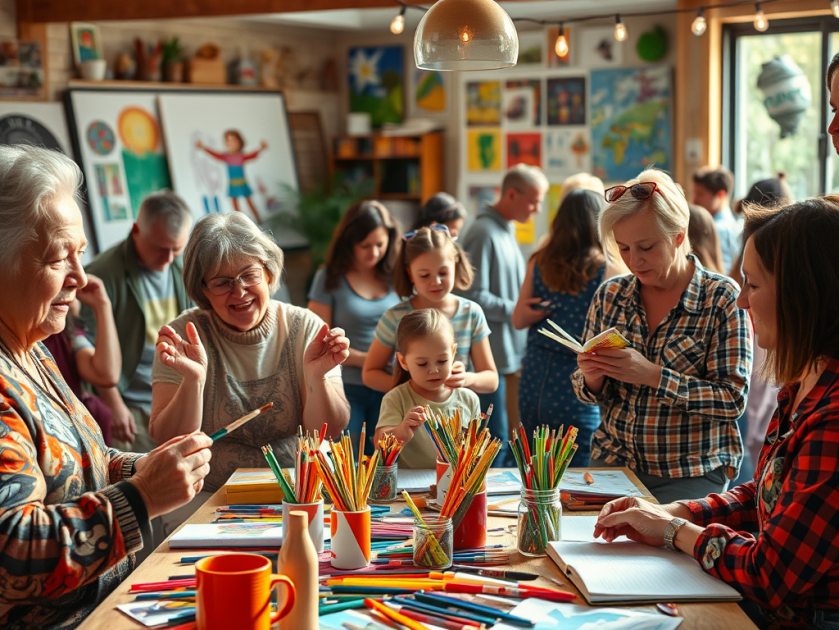
In today’s fast-paced, performance-driven society, self-expression often takes a back seat. Yet, creativity is a vital tool for improving mental health, emotional wellbeing, and resilience—for children, teenagers, and adults alike.
At Let’s Talk Better CIC, we believe that arts, crafts, and creative movement are not luxuries. They are essential for mental wellness. Whether you’re dealing with stress, anxiety, low mood, or social isolation, creative activities can offer powerful emotional support.
Creativity and Mental Health: More Than Just a Hobby
A landmark 2019 review by the WHO (World Health Organisation) analysed over 900 studies. It concluded that engaging with the arts can significantly improve mental health and emotional wellbeing.
Proven Benefits of the Creative Arts:
Reduced anxiety, stress, and depression
Increased self-esteem and emotional expression
Enhanced empathy and communication skills
Stronger social inclusion and community connection
“Art is an effective tool for promoting good health and preventing illness.” – WHO
So why is creative wellbeing still undervalued in education, workplaces, and health systems?
What Counts as Creative Arts?
Creativity isn’t just about painting. The creative arts encompass a wide range of expressive outlets:
Type of Creative Activity
Examples
🎨 Visual Arts
Drawing, painting, sculpture, collage
✂️ Crafts
Jewellery-making, origami, sewing, model-building
🎭 Drama & Acting
Role-play, theatre, improvisation
🎶 Music
Singing, songwriting, playing instruments
📝 Creative Writing
Poetry, journaling, storytelling, script writing
💃 Movement & Dance
Expressive dance, physical theatre, mindful movement
📸 Photography & Digital Media
Film, zines, digital storytelling
Each form allows individuals to process emotions and explore identity. They can express themselves in a way that traditional therapy or academics often can’t.
Creative Expression for All Ages and Backgrounds
Creativity supports mental health across all life stages:
Children process emotions through drawing, play, and imagination.
Teenagers navigate identity and relationships through music, poetry, or movement.
Adults use journaling or crafting for mindfulness and stress relief.
Older people rediscover purpose, joy, and memory recall through storytelling and song.
At Let’s Talk Better, we’ve seen:
Non-verbal children express emotions through dance and art.
Isolated seniors build connections through poetry and painting.
Teens with academic challenges thrive when given creative outlets.
👉 Creative wellbeing is universal—accessible, empowering, and inclusive.
Reducing Mental Health Stigma Through Art
Stigma remains one of the biggest barriers to mental health support. Creativity offers a safe, stigma-free way to open conversations.
How Creativity Breaks Down Barriers:
🎭 Drama allows exploration of topics like anxiety, bullying, and gender identity in a safe, fictional context.
📝 Poetry and journaling give individuals a private way to think about trauma, grief, or mental health struggles.
🎶 Music bridges generational and cultural divides, promoting shared emotional understanding.
🎨 Art can express complex emotions that words cannot—offering a powerful outlet for healing.
Through art, we tell our stories. We make the invisible visible.
Not Every Mind is Academic—And That’s Okay
Society often prioritises academic success over creativity. But not every child—or adult—learns or expresses themselves the same way.
Some thrive in science and maths. Others shine in music or drama.
Yet even though the UK’s creative industries generate over £125 billion annually and support over 2.5 million jobs, creative subjects in schools are being cut back.
It’s time to nurture creative strengths with the same priority as literacy and numeracy—for both educational development and mental health.
Real-Life Impact: Creative Wellbeing in Action
At Let’s Talk Better CIC, we witness the impact of creative wellbeing every day:
Neurodivergent children build confidence and communication through group storytelling.
Primary school craft clubs reduce lunchtime conflicts and improve peer relationships.
Youth mural projects open up conversations about mental health in schools and communities.
Poetry in care homes helps older adults reconnect with memories and reduce loneliness.
Creativity doesn’t just entertain—it empowers, heals, and connects.
How You Can Promote Creative Wellbeing
Whether you’re a parent, teacher, youth worker, or mental health professional, here are ways to champion creative expression:
Take Action:
Normalise creativity as a mental health strategy—not just a hobby.
Provide access to creative tools in classrooms, workplaces, and homes.
Host creative wellbeing workshops, art days, and open mic events.
Celebrate all forms of creativity—not just traditional ‘talent’.
Create safe spaces where people of all ages can express themselves without judgment.
Final Thought
Could Creativity Be the Key to Emotional Healing?
Imagine if the next mental health breakthrough doesn’t happen in a clinic. It can happen in a paint-splattered studio, a journal page, or a shared dance.
Let’s stop asking “Are you academic?” and start asking:
“What’s your creative voice—and how can we help it thrive?”
Because everyone—regardless of age, background, or ability—deserves to be seen, heard, and supported. And creative wellbeing is just the bridge to better mental health for all.
📣 Join the Creative Wellbeing Movement
At Let’s Talk Better CIC, we deliver creative mental health workshops across schools, youth centres, and community spaces. Our sessions range from crafting for confidence to movement for emotional release, and journaling for wellbeing.
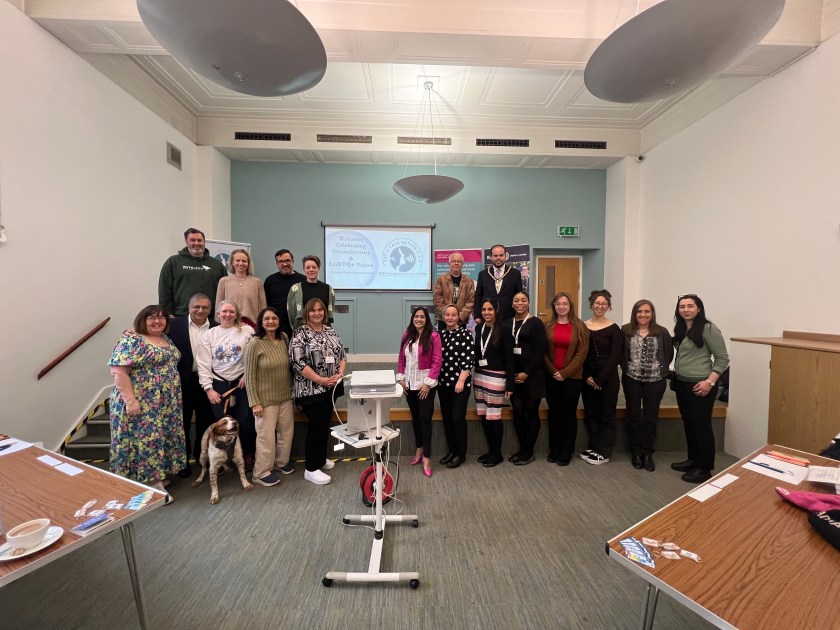
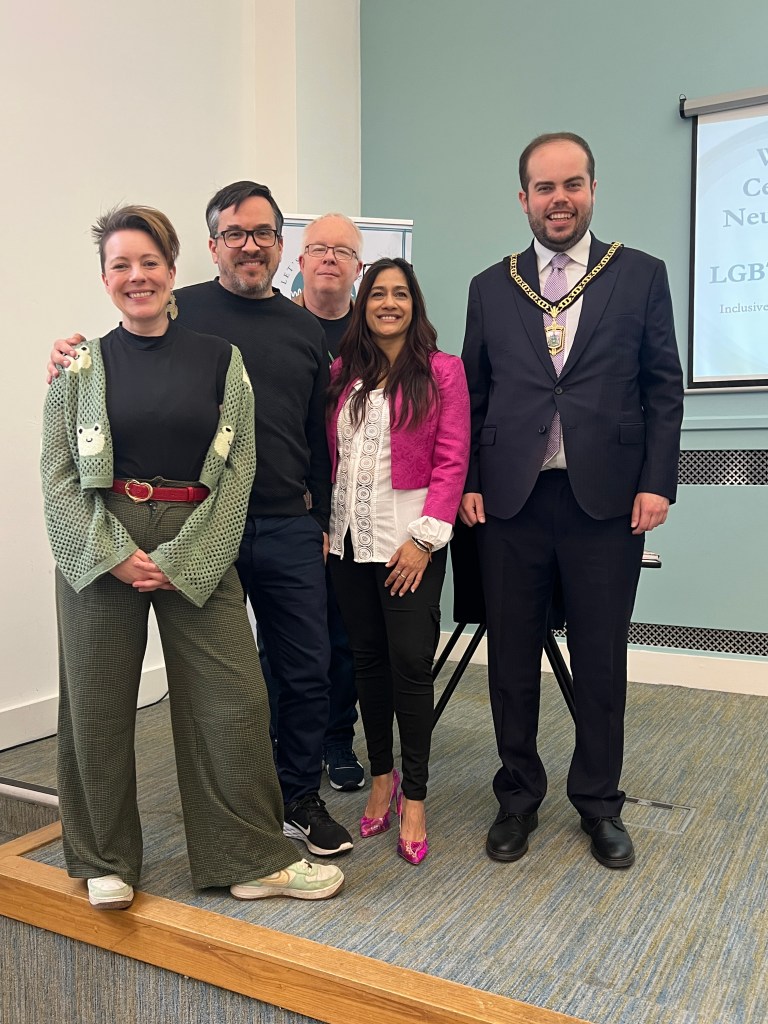
On April 23rd, Let’s Talk Better CIC proudly hosted our latest 7th community event, Inclusive Minds—Breaking Barriers: Celebrating Neurodiversity and LGBTQ+. This powerful and inspiring gathering brought together young people, professionals, community members, and allies on a shared mission to break down stigma, amplify unheard voices, and build spaces where everyone feels seen, heard, and valued.
Why did we choose this topic?
More than ever, these two topics are becoming more prominent in the public eye and especially within workplace environments. Although things have been changing and moving forward, there is still so much to be done – including understanding more about how we as a society can help to support and adapt better for neurodivergent individuals. Personally, through my encounters of working with neurodivergent and LGBTQ+, and from speaking with others, there is still a huge gap, with so much still to be addressed. In a world that too often overlooks or misunderstands those who are neurodivergent or LGBTQ+, this event stood as a bold declaration that inclusion is not optional — it’s essential.
A Day of Empowerment, Expression, and Education
Held once again in a vibrant, welcoming community-focused space, Community House Bromley, which caters for many community events, as well as the home base for many charities. The theme “Breaking Barriers” was a direct call to challenge the societal, cultural, and systemic blocks that continue to marginalise these communities. More than just a conversation, this event was a movement in action that provided a platform for those to share their lived experiences; how they made their special differences inspire them to achieve their goals and dreams; to express how stigmas and taboos can hold people’s potential back. In addition, it opened up conversations about the pros and cons of what support systems are in or not in place. Of course, this day shone a light on celebrating the uniqueness and greatness of All Neurodivergent and the LGBTQ+.
On this day, we featured a rich programme of keynote speakers sharing powerful lived experiences of navigating the world as neurodivergent and/or LGBTQ+ individuals:
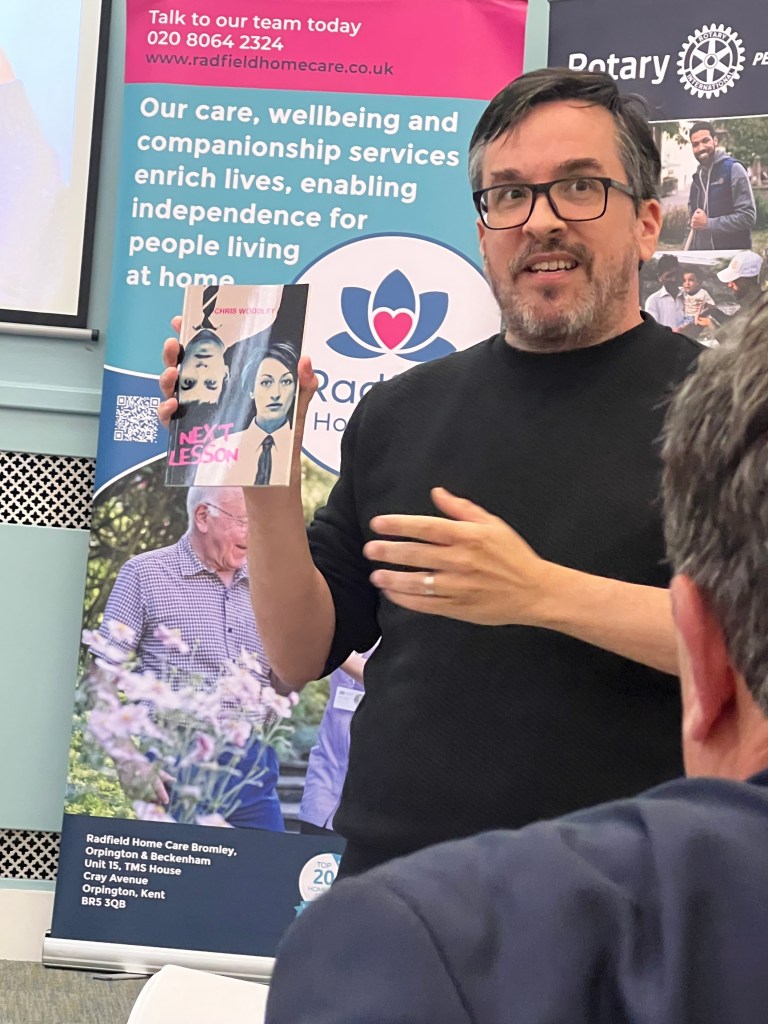
Chris Woodley, Writer and Actor, right here from the heart of Bromley, spoke about how he knew from a very early age that he was gay and later on being diagnosed neurodivergent. He was blessed with a supportive family, which made a huge difference for him growing up. He shared his struggles and how he used acting to become the incredible screenwriter he is today, giving him the power to shine!
Chris Woodley said, “As a dyslexic writer, returning to Bromley, where I was born and raised, to speak about the importance of LGBTQ+ voices and neurodivergent creatives was incredibly meaningful. Sharing my experiences growing up under Section 28 and talking with locals about my play, Next Lesson, felt especially powerful. It’s a play rooted in Bromley, yet it’s never been performed here, despite being staged at the Houses of Parliament, in the U.S., and Australia. That contrast struck a chord and reminded me how vital it is, now more than ever, that we listen to and support one another within our community. I’m incredibly grateful to Let’s Talk Better for getting the chance to share my story.”
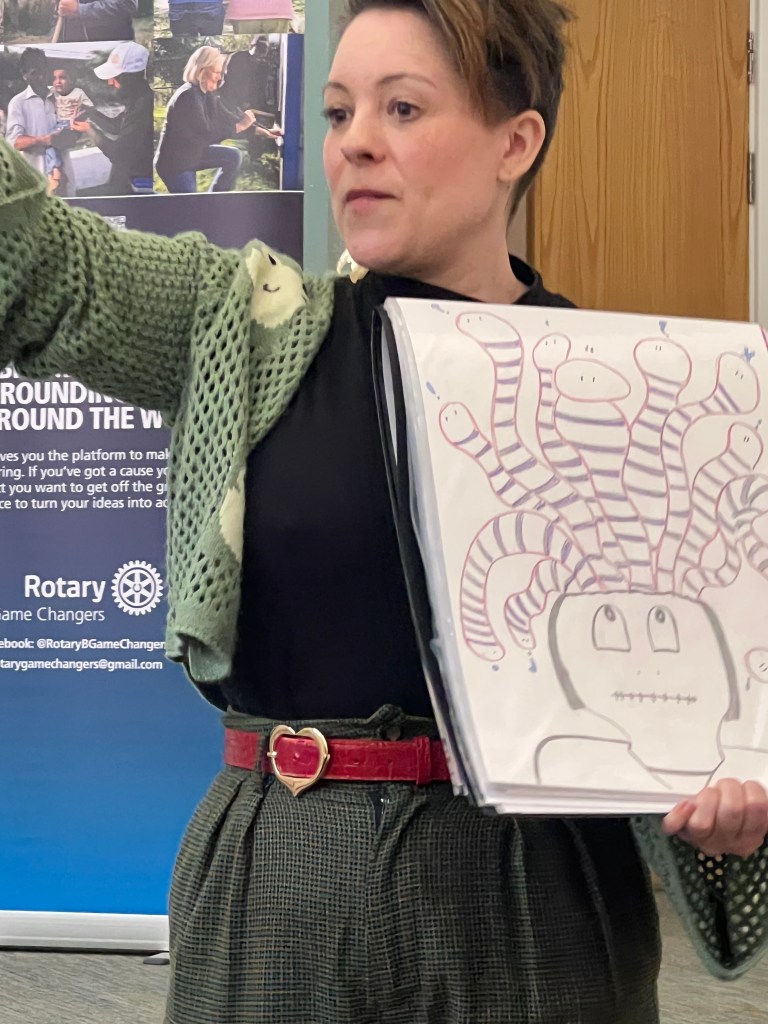
Mercedes Yearly, Director of Quest Soul Theatre, runs numerous community initiatives in Bromley, from Wellbeing Through Drama to Creative Cafes. She spoke openly about her journey being ADHD, being diagnosed bi-polar at 44 and the impact of not knowing what was truly going on- finally made sense. Mercedes also shared how ‘Talking Therapy’ didn’t work for her, as she is someone who loves to talk and doesn’t stop, and this was not what she needed. However, she finally found ‘Art Therapy,’ her creative instrument that is helping her manage her emotional roller coaster and is now qualified as an Art Therapist. It was beautiful to see first-hand some of the intimate artwork she had created in her art therapy sessions! Hear this and through the work, Zeenat Noorani- The Clarity Coach does, she knows that the key to helping her clients is about finding the intervention and modality specific to the clients’ needs.
Mercedes commented, “Let’s Talk Better is really important”
Pleased to welcome, The Deputy Mayor of Bromley (2024-2025), Cllr Johnathan Andrew, and Chair of the Bromley All-Age Autism Board, shared some of his personal experiences, and with great support for LTB, “…is a particularly important initiative”
During the event, we all took part and immersed ourselves in deep, inspiring conversations through:
Interactive activities exploring inclusive practices in schools, workplaces, and support settings — from communication strategies and sensory inclusion to allyship and mental health.
Creative expression, with spoken word, an open floor that gave space for authentic voices to be heard.
Networking opportunities to connect, learn, and take action beyond the day.
Each session was designed not only to inform but to inspire change, equipping attendees with practical tools and deeper understanding to take back into their communities.
Centring Youth Voices
At the heart of the event were the young people and how we as a society need to do more to catch the diagnosis earlier on, have the right intervention implemented and understand that not one size fits all. Like Mercedes’ story, imagine if she had been able to get this reading earlier in life, and the impact this would have made for her. Heartbreaking, and only a greater emphasis on educating the wider society, through honest dialogue, brave storytelling, and raw creativity, to lead the way in showing what true inclusion can look like. From a young autistic speaker advocating for more sensory-friendly learning environments to a trans teen passionately sharing why visibility and correct pronoun use matter, the message was loud and clear: young people are not just the future, they are the now.
A few words from our attendees:
Emma Mehuex- supporter from day one and a past speaker, “Lovely to see you today, and the event was excellent. It really got me thinking about a few things to do with neurodiversity. I am so looking forward to watching LTB grow now that it’s a CIC. “
Neil Peter, a regular attendee and past speaker of the LTB – “Working in suicide prevention and mental health, we know that neurodivergent people are at greater risk, so it’s great that community awareness is growing about the challenges they face and how we can support them better. Let Talk Better always explore these important topics, and it was inspiring to hear the personal stories of hope and recovery, particularly how those sharing their lived experience found the right pathways to support that were specific to them as individuals.”
Jacqui Weale, a proactive attendee and advocate for LTB – “All I can say is the speakers, Chris and Mercedes, it was for the audience a deeply personal story they both told of their journeys with being neurodiverse and part of the LGBTQ+ community.It spoke of pain and learning, but also of the richness of their lives because of it. It was a deeply personal, emotional, positive, insightful event for all who attended and for some, a better understanding of these communities. “
Sarah Marsh-Collings, a huge advocate and a past speaker of LTB, ”Once again, an enjoyable and worthwhile time spent at the LTB event. The first guest speaker, Chris Woodley, was entertaining and enlightening, and I made the most of his offer of a free copy of his first play, Lessons Learnt, to give to a friend’s teenage daughter – she was delighted. Unfortunately, I had to leave early, so I missed Mercedes Yearley’s talk, but feedback from other members was that it was insightful and enjoyable. Well done, Zeenat, on yet another successful event!”
Helen Marsh, Head of Communication and Engagement for South East London Care Systems and One Bromley – LTB, is “really valuable” as a safe space. Have a listen to the episode of the BromleyBuzz for context: https://open.spotify.com/episode/3xpP4wiGGHv8r9uXHYEf4t
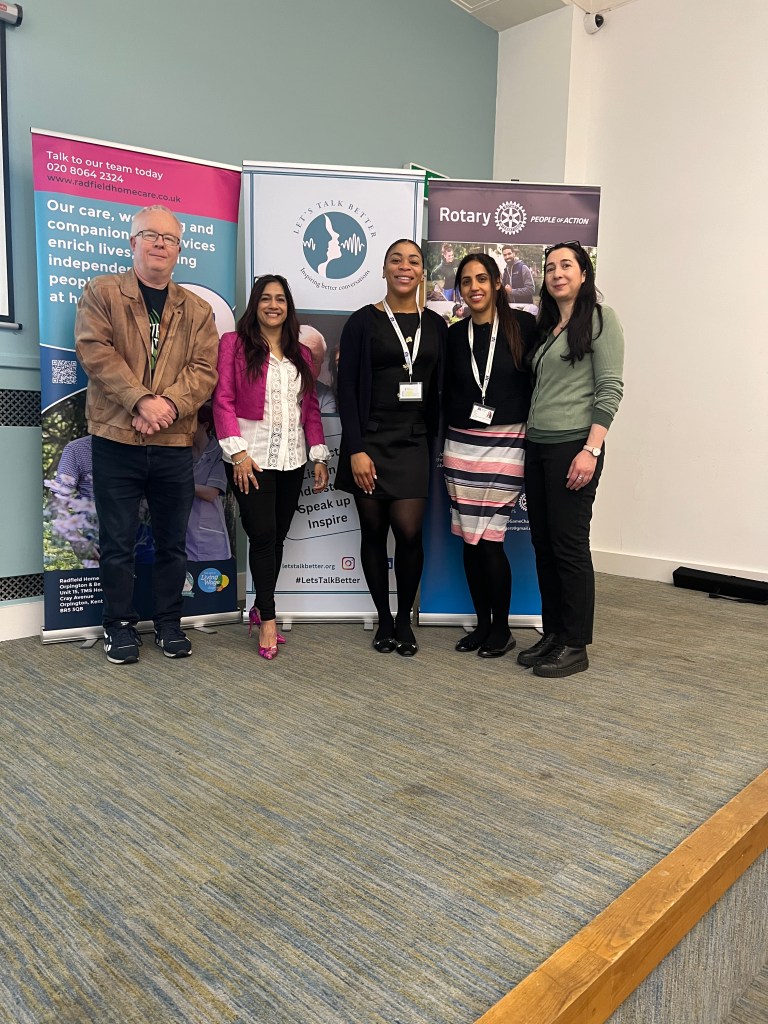
LTB would like to thank Radfield Home Care, Directors Simi Ghuman and Chanice Baugh, for their ongoing support in the work we do and our mission to bring better understanding and change for the unspoken topics and barriers – Simi Ghuman, Director of Radfield ‘‘It was a great event!’’
What’s Next For LTB?
Inclusive Minds – Breaking Barriers was not a one-off moment. It was part of a broader movement driven by Let’s Talk Better CIC to ensure that every person, regardless of identity, neurotype, experience or background, can show up fully, without fear or shame.
We’re committed to continuing these conversations, growing our network, and delivering more spaces for healing, learning, and collective action.
To everyone who attended, participated, supported, and shared — thank you. Your presence and voice made this event the beautiful, bold, and brave space it became.
Together, we are breaking barriers, opening up delicate conversations, and building better futures.
We were moved by the overwhelming positivity from attendees. A few quotes from past events:
“This was the first time I’ve felt truly safe and heard in a public event.” “I learned more in one afternoon than years of reading – hearing real stories makes all the difference.” “My child walked away feeling proud of who they are. That’s priceless.” ’‘LTB has given me the courage to step out of my fear and share my story, not just here but through my poetry and on social media, thank you.’’
These responses reaffirm what we believe: inclusive spaces change lives.
Special Acknowledgements:
Rotary Bromley Game-Changers, where we have had the pleasure of working alongside and the support of the Team Volunteers for all our events. Special thanks to Nolene Harris.
Community House Bromley, for providing such a wonderful location to hold our events – special thanks to Kerry Godwin, Business Support Officer, who has been instrumental in helping with bookings and setting up our events.
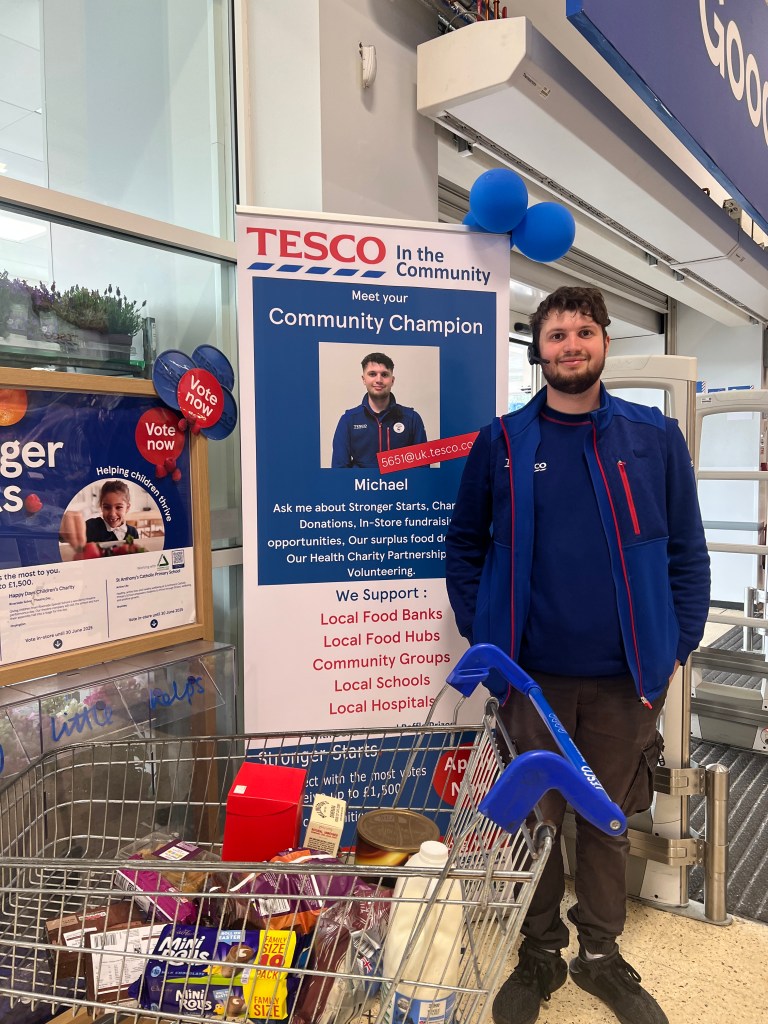
TESCOS Orpington and Bromley – Community Champions Jessica and Michael, who have been generous with their donations of refreshments, cakes, biscuits and snacks to keep our attendees energised with goodies!
Author: Zeenat Noorani – The Clarity Coach, Co-founder & Director of Let’s Talk Better CIC
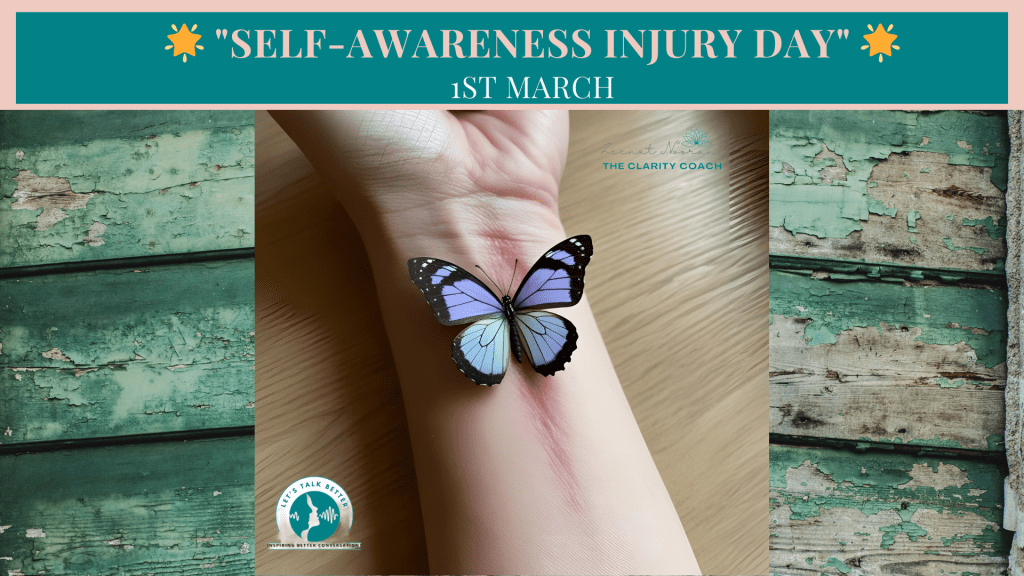
Image caption: The butterfly represents transformation, hope & the Butterfly Project a movement where individuals draw butterflies on their arms to resist self-harm.
Every year on March 1st, Self-Injury Awareness Day (SIAD) serves as a global movement to shed light on the realities of self-harm, break the stigma surrounding it, and encourage open, compassionate conversations about mental health. Self-injury, also known as non-suicidal self-harm (NSSH) affects millions of people worldwide, yet it often remains misunderstood and shrouded in silence.
Understanding Self-Injury
Self-injury involves deliberately inflicting harm on oneself as a way to cope with emotional distress. Common methods include cutting, burning, scratching, or bruising. Contrary to common misconceptions, self-harm is not necessarily a suicide attempt; rather, it is often a way to express emotions, relieve tension, or regain a sense of control. However, those who self-harm may be at increased risk of suicidal thoughts and require emotional support and professional intervention.
Why Awareness Matters
Stigma and misunderstanding often prevent individuals from seeking the help they need. Self-Injury Awareness Day aims to:
Encourage open conversations about self-harm and mental health.
Educate people on the signs, causes, and support options.
Provide resources to those struggling and their loved ones.
Foster empathy rather than judgment, so individuals feel safe reaching out.
How to Raise Awareness and Show Support
There are several ways to contribute to Self-Injury Awareness Day and support those affected:
Wear an Orange Ribbon: The colour orange symbolises self-harm awareness. Wearing it can spark conversations and show solidarity.
Share Information: Utilise social media to spread facts, stories, and resources about self-injury.
Educate Yourself and Others: Learn about self-harm, its triggers, and recovery options to provide better support.
Engage in Supportive Conversations: If someone opens up to you, listen without judgment and encourage them to seek professional help.
Recognising the Signs of Self-Harm
If you’re worried about someone, look out for these signs:
Unexplained cuts, burns, bruises, or scars, especially on the arms, thighs, or torso.
Wearing long sleeves or pants even in warm weather.
Avoiding activities that expose skin.
Mood swings, withdrawal from friends and family, or increased secrecy.
Tips for Parents, Carers, and Educators
Supporting a child or young person struggling with self-harm can be challenging, but early intervention can make a significant difference. Here are some essential tips:
✅ Stay Calm & Open – Reacting with shock or anger can push the child away. Instead, create a safe, judgment-free space for them to talk.
✅ Listen Without Judgment – Encourage them to express their feelings without rushing to “fix” the problem.
✅ Use Positive Language – Avoid phrases like “Why are you doing this?” Instead, say “I’m here for you, and I want to help.”
✅ Encourage Professional Help – Suggest speaking to a school counsellor, GP, or mental health professional.
✅ Teach Healthy Coping Strategies – Help them explore alternative ways to express emotions, such as journaling, art, mindfulness, or exercise.
✅ Work With the School – If you’re an educator, liaise with pastoral care or safeguarding teams to ensure the right support is in place.
A Message of Hope
“I understand how difficult this can be—I’ve been there myself, and I know others who have struggled with self-harm. But please know that healing is possible, and there is hope for a future where self-pain is no longer the answer.”
Self-Injury Awareness Day is not just about acknowledging the issue—it’s about breaking the silence, fostering understanding, and offering hope. If you or someone you know is struggling, remember that help is available, you are not alone, and healing is possible.
By raising awareness, supporting open conversations, and providing the right resources, we can work together to reduce stigma, promote mental wellbeing, and help those affected find healthier ways to cope.
UK Helplines and Resources
If you or someone you know is struggling with self-harm, there are dedicated support services available:
YoungMinds Parents Helpline – 0808 802 5544 (Support for parents worried about a child)
Childline – 0800 1111 (Confidential support for children and young people)
The Mix – 0808 808 4994 (Support for under-25s)
Samaritans – 116 123 (Available 24/7 for anyone in distress)
LifeSIGNS – A leading self-harm support network providing guidance and peer support.
Harmless – Offers information, training, and direct support services for those affected by self-harm.
Breaking the Chains of Body Image, Stigmas, and the Path to Embracing Ourselves
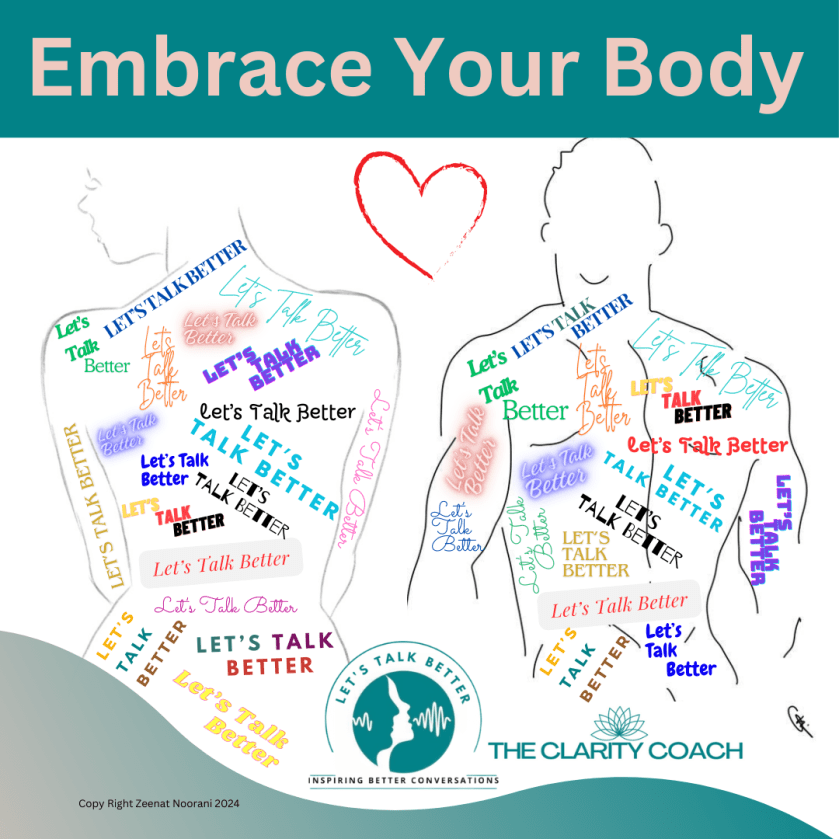
The Let’s Talk Better Campaign (LTB) held its quarterly event on November 29th, 2024, on the topic of Body Image – Embrace Yourself, Talking Stigmas & Taboos. During our recent Let’s Talk Better event, we explored some of the challenges we face, especially the younger generation and how we can foster a healthier relationship with our bodies. The discussion shed light on the staggering statistics, reasons behind the rising concerns, and actionable steps to address this growing issue.
Body image has long been a complex and deeply personal aspect of our identity, yet it has become increasingly entangled with societal pressures, unrealistic standards, and taboos that can take a toll on our mental health and wellbeing.
As I write this, I reflect on my own experience of facing the challenges of body image during my career as a professional figure skater. Looking back, this began way back during my primary school days and carried on into my early 40s until one day; I decided to take control and not allow external pressures to impact my decisions and the way I live my life. Ten years on, I am in a better place, though at times, it can be difficult as I know I am dealing with menopause and its challenges. The bonus is, that I now have a different mindset, a set of tools and strategies that help me keep a perspective of what is real. With this, I have the qualifications and a true passion to help support young people to better educate and understand themselves and their bodies to help prevent them from falling prey to societal expectations.
Let’s look at the Current Landscape with Body Image and Young People
Recent studies paint a concerning picture:
According to a 2023 NHS Digital report, 1 in 3 children and young people aged 11-16 feel dissatisfied with their body image, a significant increase from previous years.
Social media platforms have been identified as a major influence, with 87% of teens reporting they compare their appearance to edited or filtered images online.
Body dissatisfaction is now linked to higher rates of depression and anxiety, with the Mental Health Foundation reporting that 61% of young people who struggle with body image also experience significant mental health challenges.
These statistics underline the urgency of addressing the body image crisis, particularly as it continues to escalate among younger generations.
So, Why are Concerns about Body Image increasing?
Several factors contribute to the rise in body image concerns:
Social Media and Digital Culture: The constant exposure to curated, often unrealistic images on platforms like Instagram and TikTok creates a toxic comparison cycle. Filters and editing tools blur the line between reality and aspiration, leaving young people striving for unattainable perfection.
Cultural Standards and Media Representation: Narrow definitions of beauty continue to dominate movies, advertisements, and fashion. This reinforces the idea that only certain body types are “worthy” of admiration.
Bullying and Peer Pressure: Young people frequently face judgment or teasing about their appearance, both online and offline. This not only damages self-esteem but can lead to long-term mental health issues.
Post-Pandemic Lifestyle Changes: The COVID-19 pandemic disrupted routines, increased sedentary behaviour, and heightened feelings of isolation—factors that compounded body image struggles for many.
What are the impacts of this on Mental Health and Wellbeing?
Body image issues are more than skin deep. They can:
Lead to low self-esteem, affecting school performance and relationships.
Trigger disordered eating behaviours such as binge eating or restrictive diets.
Increase the risk of anxiety disorders and depression, particularly when combined with cyberbullying or social isolation.
Reduce participation in physical activities due to fear of judgment, further exacerbating health concerns.
Insights from the Embrace Your Body Event
Our Let’s Talk Better campaign brought together young people, parents, and experts to discuss how we can challenge stigmas and embrace body diversity. Key takeaways included:
Shifting Narratives: Guest speakers emphasised the importance of celebrating all body types and recognising that beauty comes in many forms. One speaker noted, ‘Your body is your home. It’s not meant to fit anyone’s expectations but your own.’ ‘Your body is like constellations of beautiful stars.’
The Role of Parents and Educators: We all further discussed how to model positive body language, avoid negative talk about appearance, and focus on health over aesthetics.
Self-Compassion Practices: We introduced mindfulness exercises to help young people practice gratitude for their bodies’ functionality rather than their appearance.
I would like to share some tips for Preventing Body Image Issues
To combat these challenges, we must foster environments where young people feel empowered to embrace their uniqueness. Here are actionable steps:
Educate About Media Literacy: Teach children and teens to critically evaluate the images they see online and understand the prevalence of editing and filters.
Promote Positive Role Models: Highlight diverse representations of beauty in media, books, and community events.
Encourage Open Conversations: Create safe spaces at home and school where young people can express their feelings without judgment.
Focus on Strengths Beyond Appearance: Praise qualities like kindness, creativity, and resilience over physical traits.
Engage in Advocacy: Support campaigns and organisations working to challenge harmful beauty standards and hold social media platforms accountable.
My final message to you: A Path Toward Acceptance
Body image will always be a part of how we see ourselves, but it doesn’t have to define our worth. By breaking stigmas, challenging societal norms, and prioritising mental health, we can empower young people to build a healthier, more compassionate relationship with their bodies.
Together, let’s embrace the message shared at our event: ”Every single body is a beautiful body.”
How are you fostering body positivity in your community? Share your thoughts and experiences in the comments below.
The arts are one of the best sources of inspiration for talking better, for reducing stigmas and taboos, and helping humans to be better humans.
Theatre. Television. Radio. Cinema. Art. Dance. Comedy. Festivals. Music. Literature. Poetry. Sculpture. These are some of the ways we come together to express and experience the feelings, thoughts, and learning that we need to talk and live better.
One of the most longstanding examples of positive fiction as a radio drama is The Archers on BBC Radio 4, which has been broadcast since 1951, clocking up over 20,000 episodes.
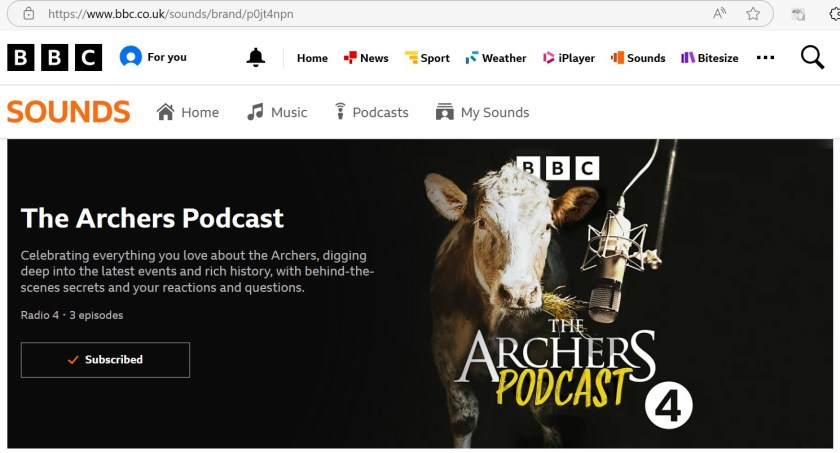
Now, it has a dedicated official podcast, ‘The Archers Podcast‘ with Emma Freud, which is exploring the plots, the people, the history, the humour, and the legacy of the show. That greater look into the themes is a bonus from the point of view of Let’s Talk Better.
For in recent history the drama (without being as heavy in tone and content as many TV shows) has covered such topics as crime and punishment, alcoholism, coercive control and gaslighting, business failure, climate change and ecology and (unsurprisingly) changes in agriculture, aspects of LGBTQ+ relationships, and a lot more, typically packed into 6 packed episodes of 13 minutes every week (with an omnibus edition!). Above all, the show remains as entertaining as it does relevant, which is quite an achievement.
As our latest event nears, ‘Embrace Yourself: Talking Body Image Stigmas and Taboos’on 29th November, we wonder to what extent The Archers has covered body image and eating disorders? Or will again? An internet search shows that the character Helen had anorexia as long ago as 2004, but as one of our speakers at the event, Jenny Tomei of Jenup, finds in schools here in the UK and recently in Brazil, body image is if anything accelerating as an issue and a source of harm in the lives of young people especially.
We will add to this post other examples of noteworthy offerings from the arts and media and creatives that contribute to our talking better, but it seems reasonable to start with a “a contemporary drama in a rural setting” that has been going now for over 70 years.
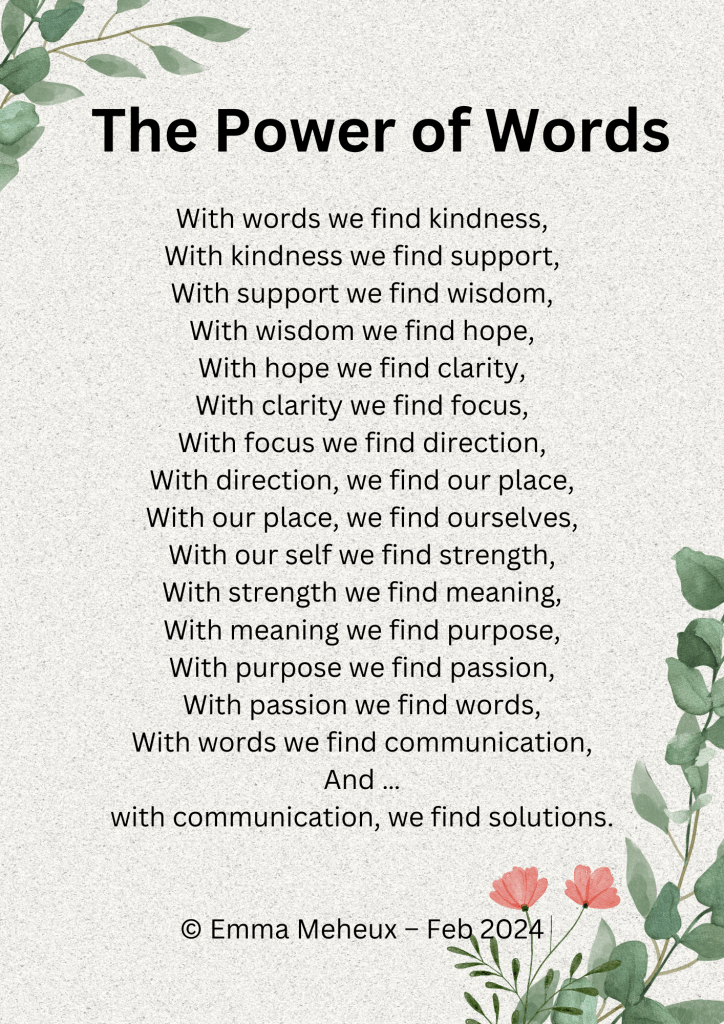
A beautiful and inspiring poem written by Emma, especially for the Let’s Talk Better campaign which she read aloud at the First Anniversary event ‘ Celebrating Positivity’ on the 22nd of February 2024.
Emma has been a huge loyal supporter of what the LTB stands for since it launched in February 2023, not missing a single event. More importantly, what we do has given her and many others a platform where they feel safe to speak up for the very first time, sharing their ghosts from the past. And this is exactly what Emma did. She shared and spoke about her challenges of the past through several poems, touching the hearts of many of us who were in that room. These poems she shared were heard for the very first time ever. We are honoured that you chose Let’s Talk Better to do this and to create a poem for us.
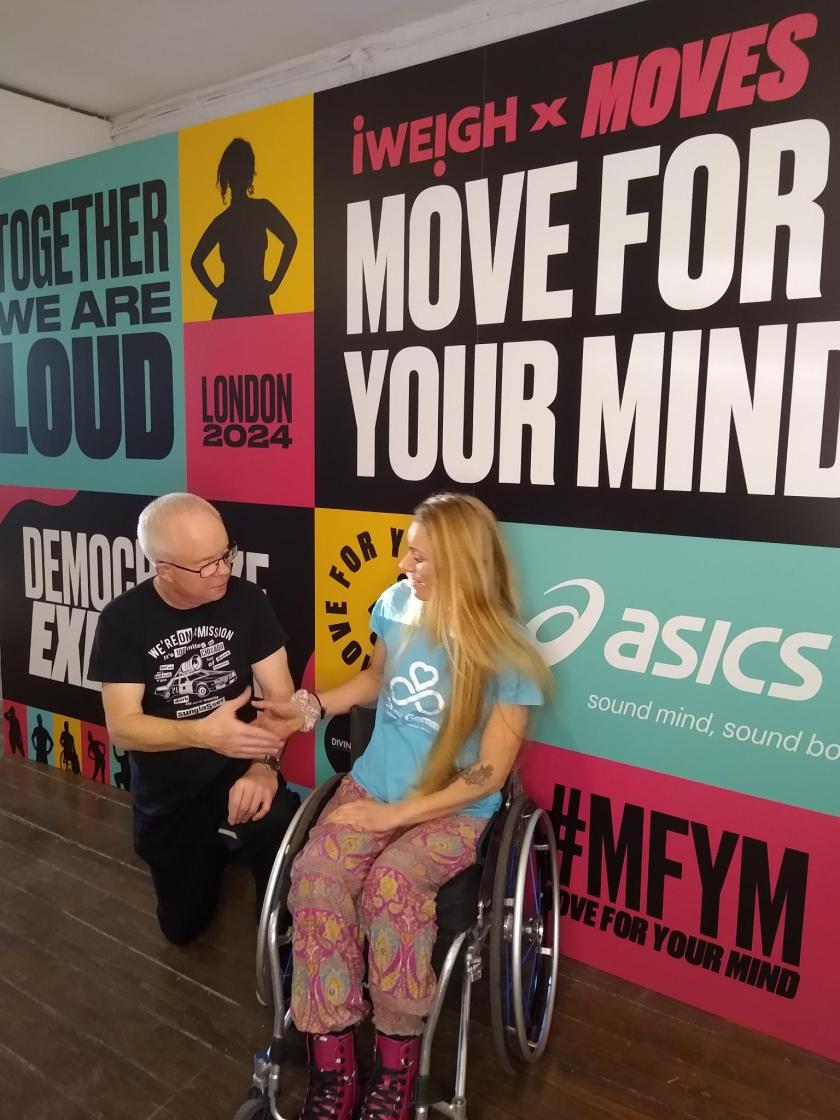
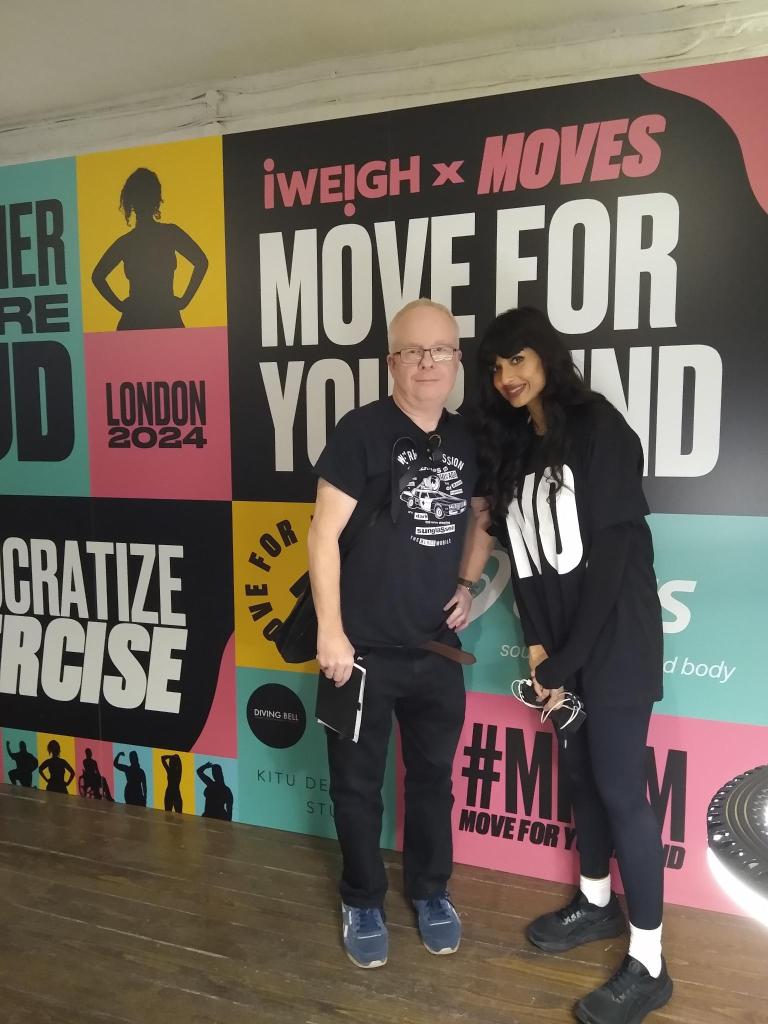
Feature image: Let’s Talk Better’s Darren with Casey Gemma.
Revolution?
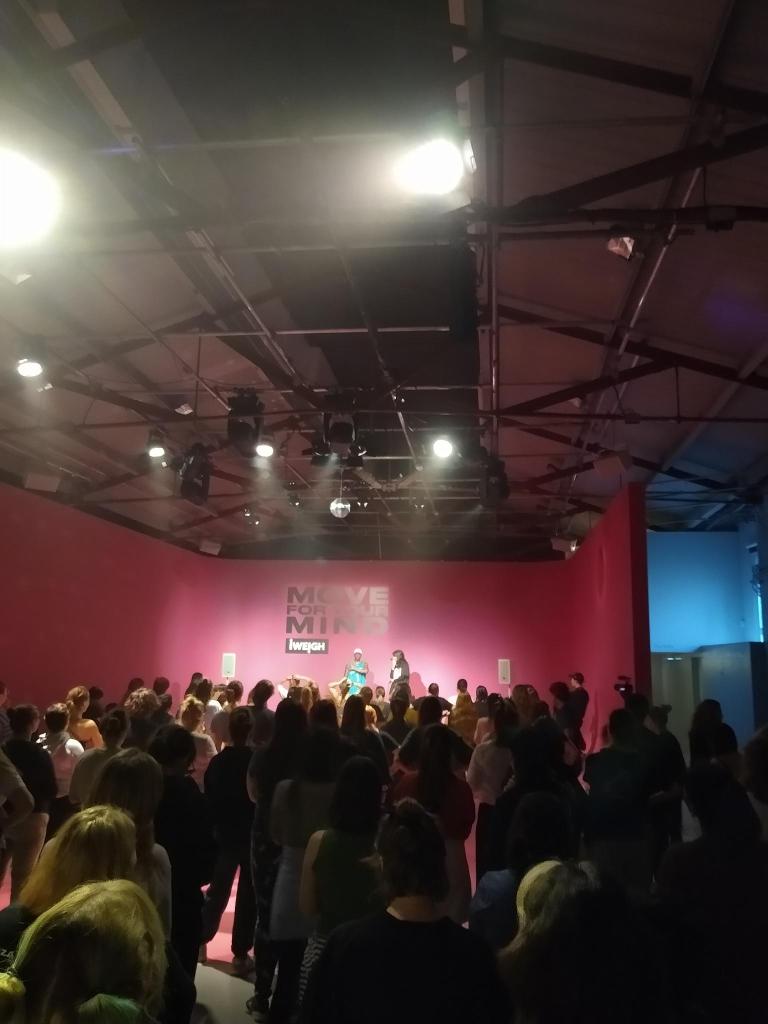
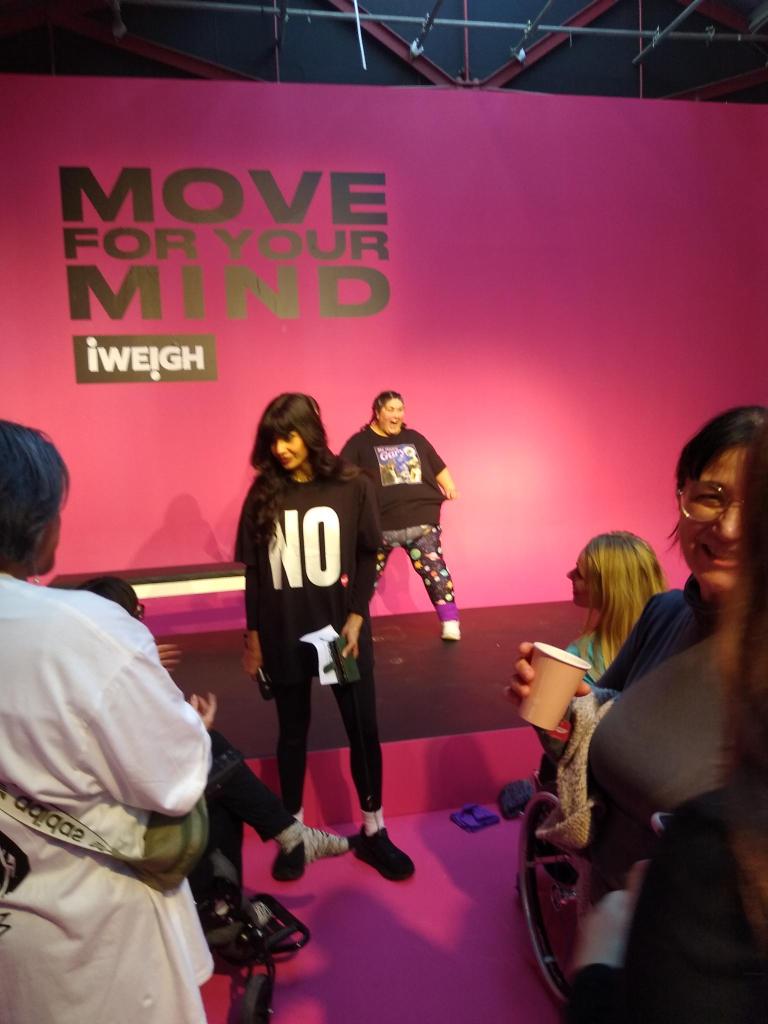
“We’re democratising exercise. We’re taking it back, together. This is the beginning of the revolution”, said actress Jameela Jamil at the close of I Weigh Community’s UK debut ‘Move For Your Mind’ event in London on 19th January 2024. This was a group of people meeting up to have fun and counteract toxicity in society around bodies and minds. We were united behind Jameela’s message that, “You must move your bodies for you, and not our ridiculous society”.
The more I listen to Jameela’s stories (and podcast), the more I understand why this is needed, and that I can identify as part of the ‘we’ of I Weigh. Such as her statement that, “I really mean this s**t. This is what I am obsessed with… for you… and no one being as sad as I was for half of my life”. That half involving anorexia, depression, and an illness that isn’t always diagnosed or acknowledged.
As I Weigh’s campaign of activism and radical inclusivity accelerates in its sixth year, it hit the ground running in the UK with this joyous, no-holds-barred celebration of movement. It tackled tired, tiresome, and persistent conventions around the ‘ideal’ body, ‘no pain, no gain’, and diet culture, a culture that in some respects might be getting worse, not better.
The day begins
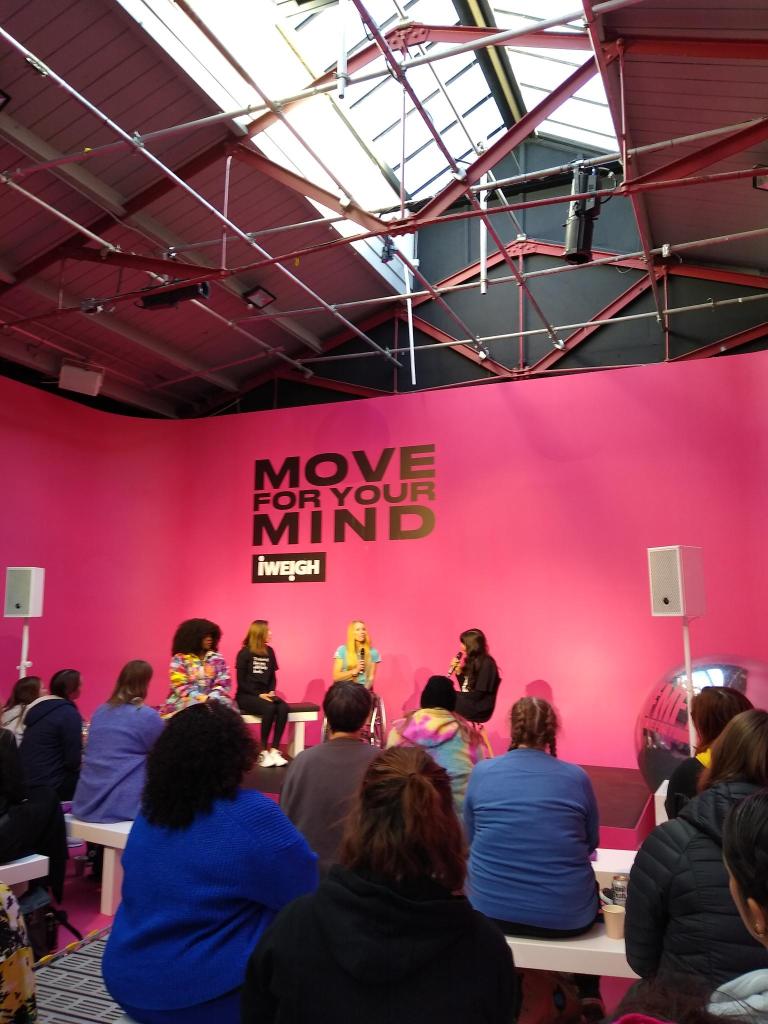
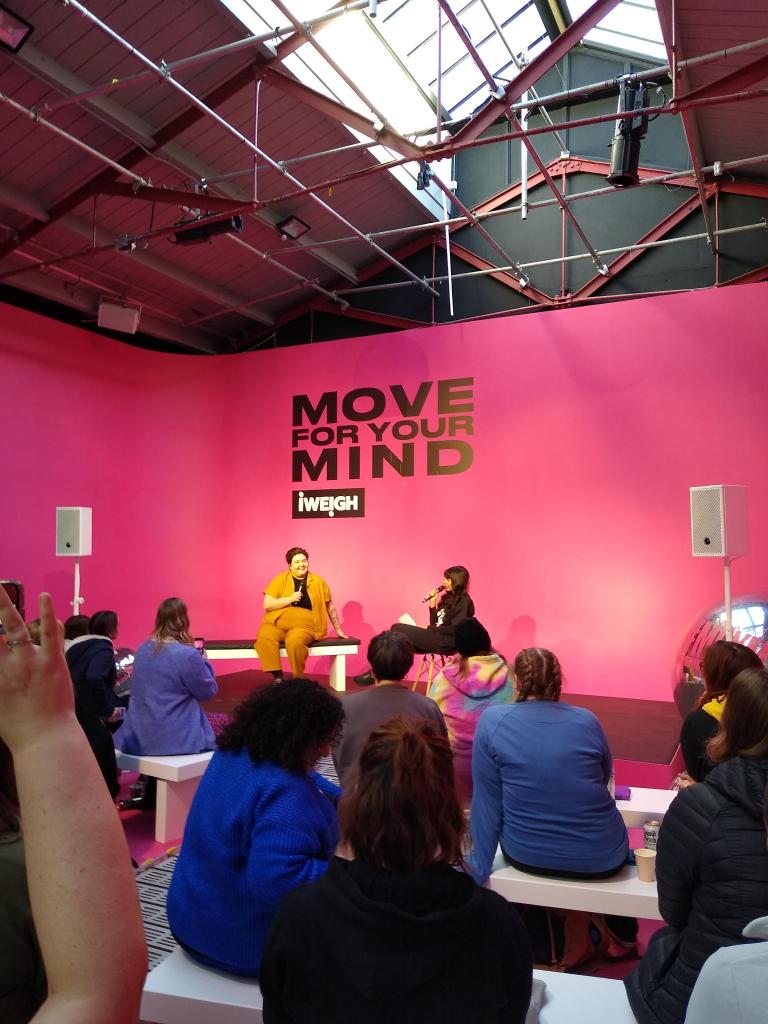
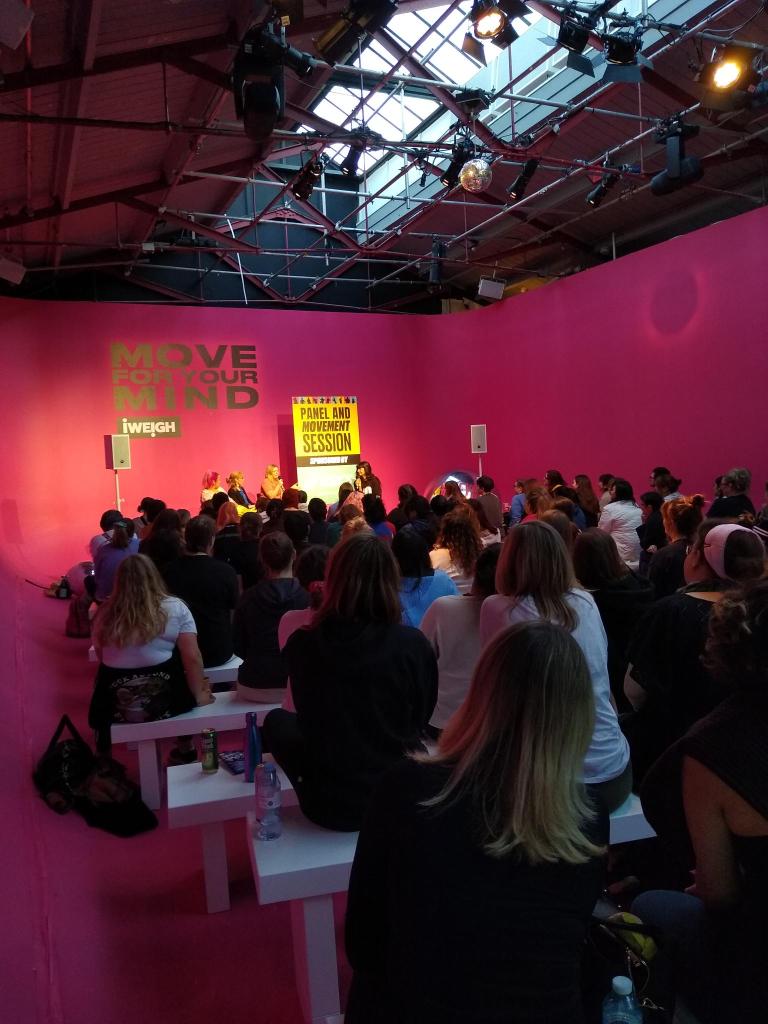
I was an early arrival, third in the queue outside the venue, and grateful for the sun appearing on a very cold day. Inside, I was soon in a hall with a freshly painted pink backdrop, Strictly Come Dancing-style glitterballs, and portable benches (soon to come in useful) with gifts waiting for us (gym sweat towels, canned drinks, and I Weigh badges). Jameela bounced onto the stage (yes, that isn’t just a cliché), saying, “Holy s**t, I am an absolutely petrified public speaker!” More serious words followed, “I can’t believe diet culture has worked its way into every area of our lives, and now exercise.” As Jameela later said, for a long time she regarded exercise as self-punishment for any departure from a diet regime.
Breaking barriers, and still broken lifts
Jameela said she “…started I Weigh, with PMS, in the back of a tour van.” There is clearly a lot more to I Weigh than reclaiming movement, but this day with one focus was a terrific showcase for change. That was clear from the first panel session, with Casey Gemma, Elizabeth Davies and Stephanie Yeboah. All three, and Jameela, have suffered from eating disorders. Their session, ‘Breaking Barriers & Stereotypes’ was as frank as anyone would expect if they have listened to Jameela’s I Weigh podcast. I felt tearful when Casey revealed that the lift in her gym hasn’t worked for 9 months, meaning she has to be carried upstairs. I loved stories such one told by as Elizabeth, a.k.a., ‘ThisWomanLIFTS’ – about going to the gym after childbirth and wetting herself, leading to the awkward discovery that “… there’s so little they tell us about our bodies”. Stephanie offered the very sad thought that, as a fat black girl (words taken from the title of her book), “I have always associated gym fitness with shame”, but she also went on to say she is now enjoying the gym, to build up her favourite features (not the words she used!). The quote of the session came from Jameela, “If you’re getting bigger or smaller, it doesn’t matter. Are you getting happier? Are you sleeping better?” I also loved Casey’s saying, “At the moment my mantra is ‘feel the fear and do it anyway'”, which means a lot to me since trauma therapist Susie K. Brooks introduced me to the indispensable book of that name recently. Casey added, “Coming out of your comfort zone a little bit opens up a whole new world.”
Liberation
Then Jameela was joined on stage by comedian Sofie Hagen, one of Jameela’s “absolute faves”, who here introduced Jameela to the concept of a ‘Queer movement specialist’, a personal trainer/therapist who is helping her address body pain issues, and to learn about her nervous system – something she recommends to others. Gym was, to say the least, not a comfort zone for Sofie, but having discovered “fat liberation – it was such a relief I didn’t have to exercise again”, she says, “I really do like the gym now… I kind of feel dirty for saying it!”
Somatic time
After a break and those moveable benches were, indeed, moved, Aki Omori led the room in a somatic movement session. This consisted of gentle movement, self-awareness of parts of the body, and (with permission) touching others. It was well-timed, for even though speaker after speaker had spoken of progress and hope, they had also described numerous harrowing experiences at the hands of societal norms and diet culture. In some cases with the fear Jameela expressed, “Am I going to get sucked back into this? It’s terrifying.”
On reflection, I know that it is all too possible to slip back into bad habits, let alone conditions such as anorexia, something that I have picked up from campaigner Jenny Tomei of askjenup, here in Bromley.
No Panic at this Disco
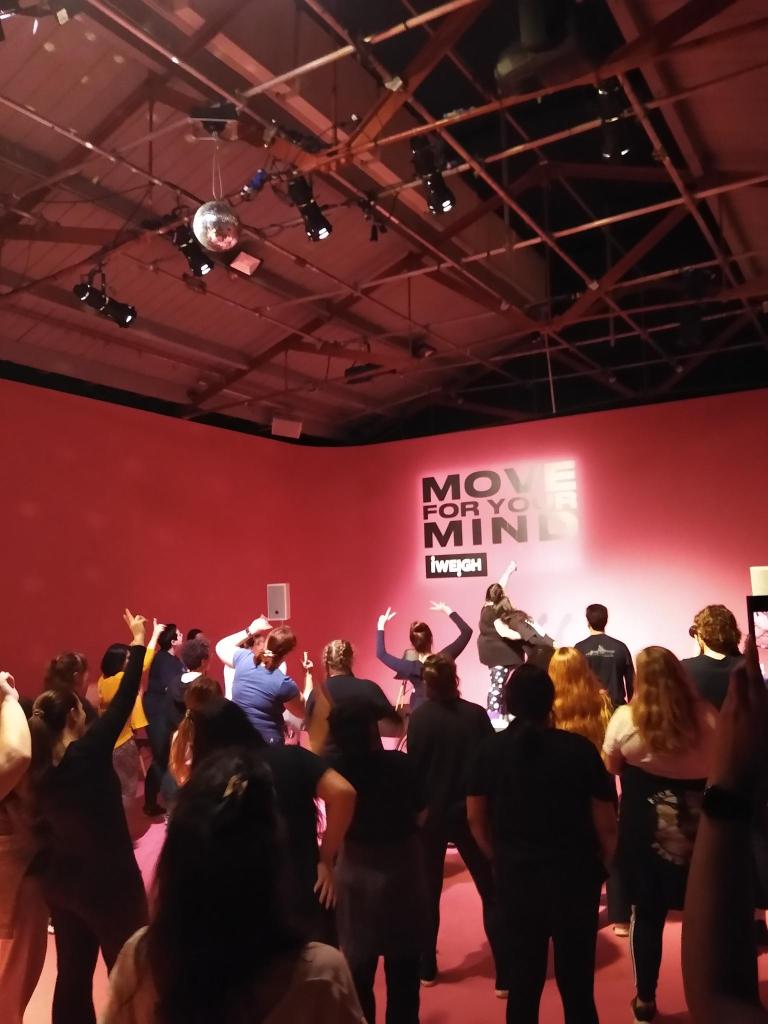
Disco – as Sophie Ellis Bextor has reminded us – is cool, and so was the leader of the next session, Movement Director Joelle D. Fontaine of At Your Beat, ‘pioneers of diversifying fitness’. I loved the lights being dimmed for those of us lacking in dance moves and coordination so that we couldn’t as easily envy the more talented! I also loved the dance, which was brisk and joyful, without being hardcore, especially Tina Turner’s ‘Proud Mary’. I chatted on the day with people who said that they love fitness trainers who look like them. Well, my bod doesn’t look like Joelle’s! Even so, it was another session of joyful movement. Jameela said, “How different my life would have been with something like this.”
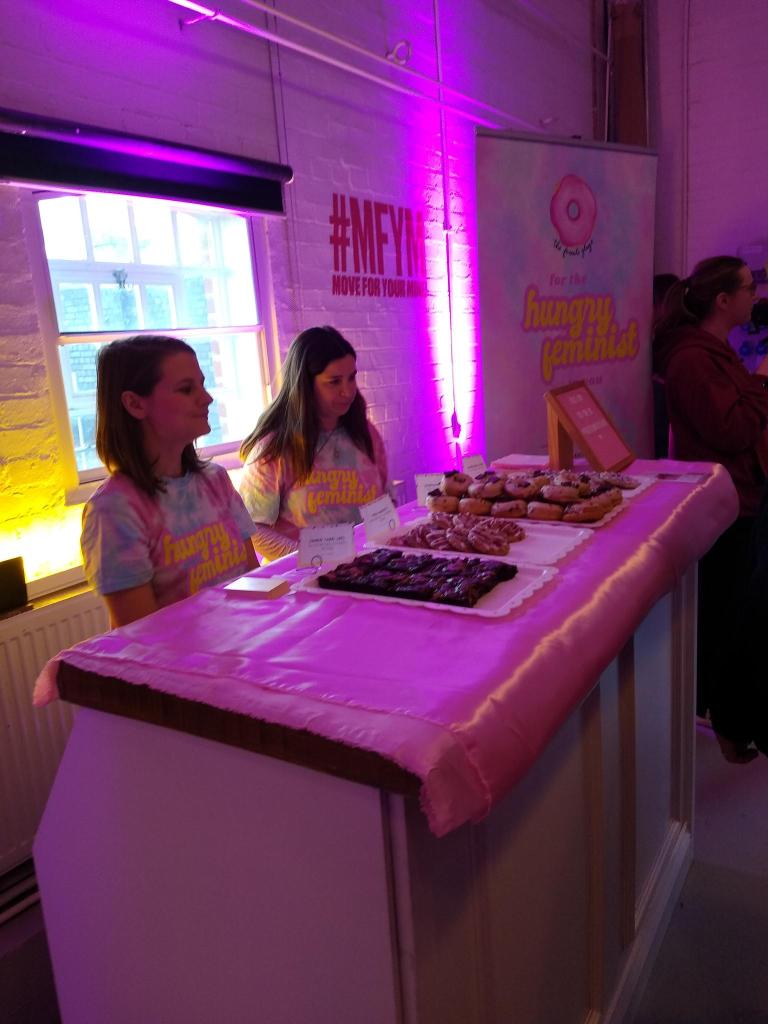
Cakecercise!
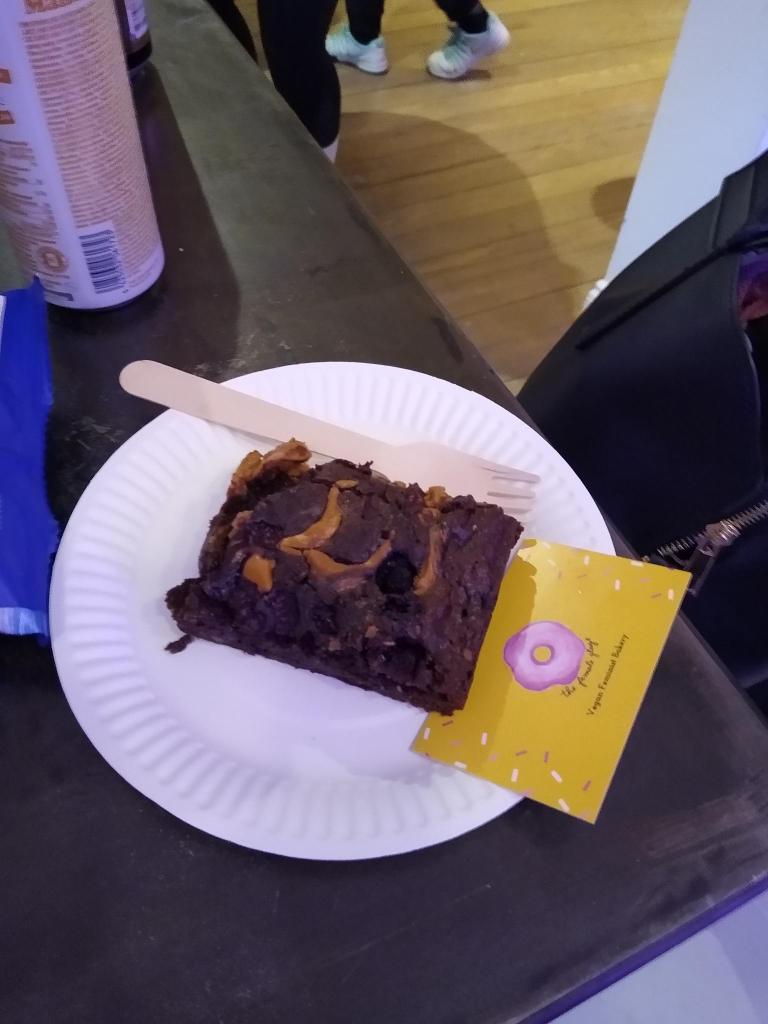
By then the feelgood factor in the room was off the charts, with complete strangers smiling at each other in a very un-British manner, and I took time out to investigate the refreshments (and a toilet with a mirror with the words ‘YOU’RE DOING AMAZING’ happily emblazoned on it).
Joy of joys, this was a movement event without shame, and so the range of carelessly calorific bagels, and The Female Glaze products was a joy to behold, and the slabs of red velvet cake and brownies seemed especially popular!
F**k, yeah! ASICS
As our digestions coped with cake, we moved more slowly on to a sponsored session, the ASICS panel, “the only ‘inclusive’ brand that said, ‘F**k, yeah’ immediately” to helping, confided Jameela. This panel, ‘Moving away from performance-based exercise’ featured Megan Jayne Crabbe (who I had met and been impressed by before), Tally Rye, and Hayley Jarvis of MIND. Tally’s message was, “If all you think about is diet and exercise, you don’t have much time for anything else… I got out of my selfish bubble.” And, which as a person newly enjoying purposeful walking, I very much get her saying, “Whatever gets you going, gets you going.” Perhaps even better was the slating the panel gave to the ‘no pain, no gain’ philosophy, reinforced in movies, Jameela said, by the message that if “people are having fun, you’re not working hard enough.”
Hayley referred to working with ‘jolly joggers’, another new concept to me, aged 18-88, and working for ‘Couch to 5K’, but with a difference. Hayley said, “It’s not really about the running. Park Run? It should be called Park Walk. You don’t have to run.”
15:09
Tally Rye led a movement session called ‘15.09’, after the amount of time movement is said to take before a provable uplift in mood. I had gone off (unsuccessfully) to discover whether the I Weigh themed T-shirts I had seen near the food and drink could be purchased. Consequently I only joined in for part of this movement session, meaning I moved for under 15 minutes and 9 seconds – and I still had a mood uplift from participating.
Joyful jiggles
The ‘Joyful Jiggles Twerkshop’ with Megan Jayne Crabbe and Nana Crawford didn’t deliver on my worst fears, e.g., compelling me to rotate my posterior extravagantly and ostentatiously, but this was the point at which a few of my more neglected muscles started a gentle protest. Post-event video confirmed that the twerking was more pronounced the nearer you got to the stage!
Missfits fitted right in
Becky Scott’s movement session was stretchy, without being stretching, affirmative and beautiful. I had earlier had a conversation (and an uncoordinated, breathless pairing in Tally Rye’s movement session) with Gabriela, a soon-to-be website founder who said she loved attending training classes run by people who “look like me” – meaning those with plus-size figures. The icon of Missfits Workout, as it turned out, was one of those trainers who she was talking about. I chatted with Becky afterwards and loved the warmth of her personality.
Taking #iweigh to the London borough of Bromley
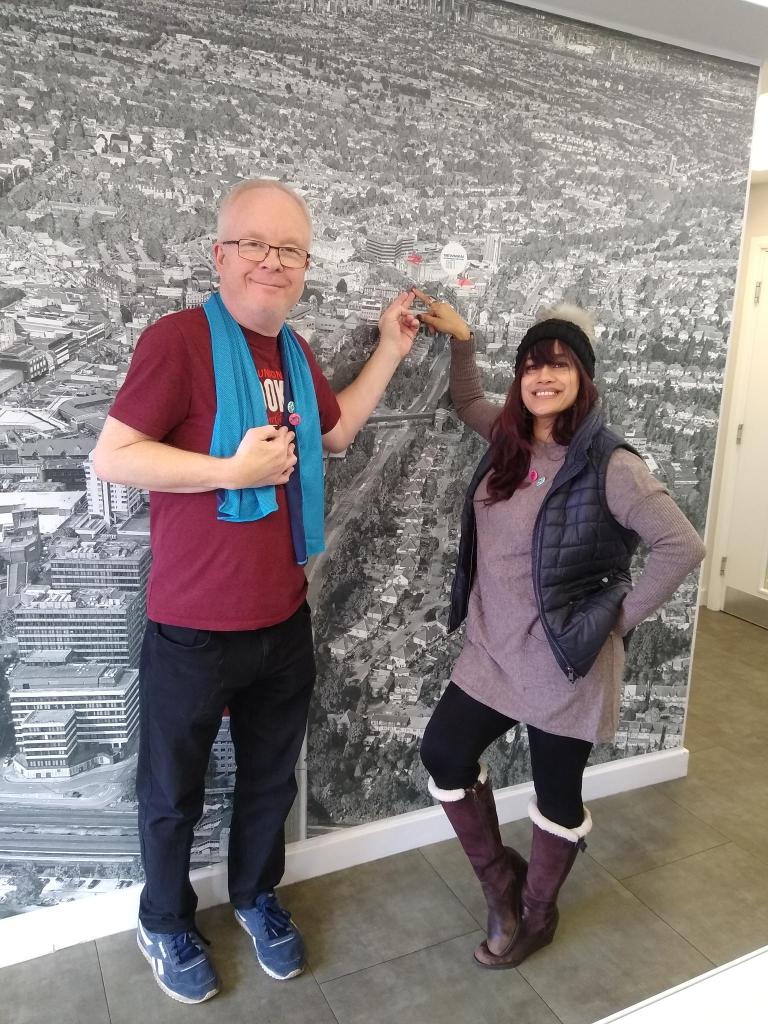
Remember, what Jameela said early on? About starting I Weigh, with PMS, in the back of a tour van? I Weigh and its messages can’t grow in isolation. They need support and supporters. That’s why I am talking about it via every channel I can (such as this community podcast episode) and to people I meet, now, day in, day out. It is also why Clarity Coach Zeenat Noorani and I have the I Weigh badges and towel on in the image above, standing in front of a map of Bromley, where we live, and where we started our own campaign, Let’s Talk Better. We can help I Weigh ‘on the ground’ by spreading the word here and beyond, and we will. That starts in earnest with this blog post and at our upcoming first anniversary event, ‘Celebrating Positivity’, on 22nd February. That was why I asked about the T shirts. Plus, I quite like the idea of strolling about with a T-Shirt emblazoned with the word ‘NO’.
What impact did the event really have on me? Gaining a sense of lasting relief from being with good people doing exceptional things. Pleasure at knowing that people from across the UK and beyond are pushing back against the most dangerous impacts of advertising and social media. Concern as, for all that I Weigh is doing, there is so much more to be done before we humans can feel comfortable in our own skins.
Missing men?
Is there even more to be done among men? Out of around 160 attendees, I was one of rather less than 10 men present, including the people there to work. This came some time after I had attended a book launch Q & A session run for Michelle Elman and Megan Jayne Crabbe. I had been the only man in a room of 50 or so people. The book was titled ‘The Importance Of Being Selfish’. Both that and ‘Movement for the mind’ theme of I Weigh aren’t gender-specific. At I Weigh, once again, I felt a little like I was a delegate for another gender. When I did find a first fellow man to speak to, he told me that he didn’t really know what the event was for, but he had thought it might be fun, so he bought a ticket. Are men sleepwalking through what is a widely acknowledged mental health crisis? Are we even more part of it in our impact on women by not thinking about this stuff? Questions I would like to put to male friendship expert Max Dickins, who may have picked up insights into this along the way. Jameela Jamil has spoken on her podcast about the need to engage men, and did here as well. I am going to talk about I Weigh at the often male-dominated business networking events I attend, especially the one I mention below.
Exercise horror!
I had a shock one week after the event when I attended a business networking group that I visit from time to time. It has a rather laddish culture: swearing (I can’t cope with swearing in a meeting that starts at 6.30am!) and anatomical jokes are the norm. Unlike at the I Weigh event, men outnumber women. One movement instructor, I won’t say which variety, delivered a short ‘elevator’ pitch, and talked about their studio being a ‘torture chamber’, filled with devices to suspend and contort clients. They recounted how one recent client had screamed during a session. This produced laughter from the room, and horror from me. How has our attitude to health and movement normalised this?
Little wonder, then, that Jameela had said, “This movement is about finding trainers to help us do it for ourselves.” Certainly not those who take exercise as meaning that sweating, hurting, and most of all throwing up are a “badge of honour”.
I Weigh pride
My blue I Weigh gym sweat towel is now proudly adorned with two I Weigh badges that I took home, and it might even find its way into an actual gym! Where I will be, in the spirit of I Weigh, under no pressure to do anything.
The author of ‘The Perfection Trap’, Thomas Curran, says in that book that there is a very strong and unhealthy link between things being identified that should be good for us, problems that need to be solved, and the sale of commercial products and services. “Think positive! (Yes!) Unlock your potential! (Yes!!) You’ve got this! (Yes!!!)… Here’s a gym membership (Oh). You only have to peel back the wafer-thin facade of this age-old [advertising] industry and you’ll invariably find the timeless detail: not cool enough, not fit enough, not attractive enough, not productive enough without a certain brand, subscription, gadget or commodity.”
He goes on to say, “We are who we are: the rickety lump of imperfection that we go to sleep with every night. Embracing those flaws, being kind to ourselves, and recognising that to be human is to be fallible is the equivalent of taking a sledgehammer to perfectionism. Keep practising self-compassion whenever this world tries to defeat you. Because no matter what the advert says, you will go on with your imperfect existence whether you make that purchase or not. And that existence is – can only ever be – enough.”
As 2024 begins, we will be looking forward to celebrating the first anniversary of the #LetsTalkBetter campaign with an event themed ‘Celebrating Positivity’.
Moving on from 2023 with its three events, Zeenat’s being named as a ‘One In A Million’ figure in a national magazine, and inspiring and creating better conversations around #stigma and #taboo and other topics, we pick up the thread again in 2024.
That includes Founders Zeenat Noorani and Darren Weale saying, ”Thank you to all of you who have supported us on our journey so far. Without you by our side, this would not happen. Together, we are creating positive change.”
Let’s Talk Better is a campaign founded in February 2023 by Zeenat Noorani and Darren Weale aiming to encourage better conversations to improve people’s lives. It has a practical focus in the London borough of Bromley, and is creating a toolkit to inspire better conversations more widely. We are grateful to Radfield Home Care for sponsoring two of our events to date.
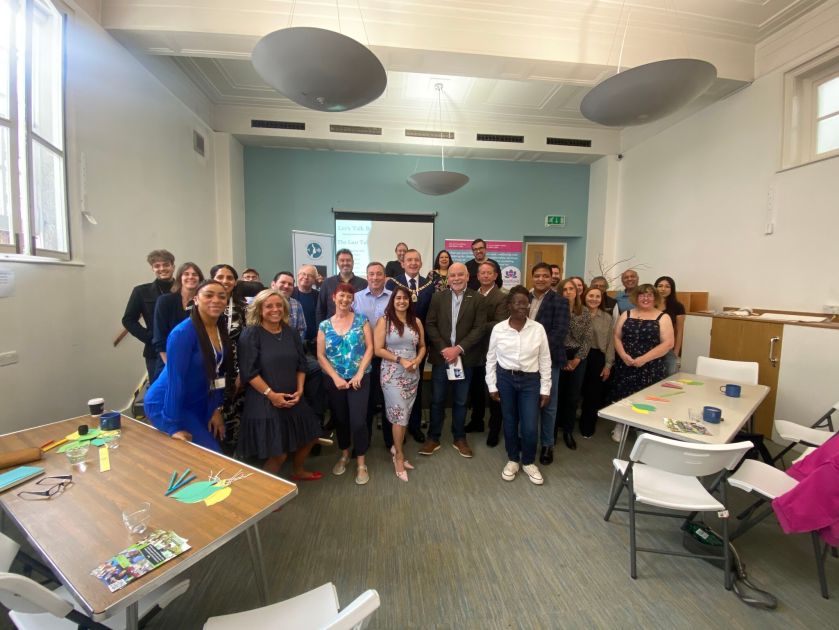
Growing from strength to strength by bringing people together with shared visions of making a difference in opening up difficult conversations around taboos and stigmas, the Let’s Talk Better (LTB) themed event ‘The Last Taboo’, on 21st September 2023, couldn’t have gone any better.
There are so many unspoken or feared topics which we seldom talk about, and that needs to change. LTB Founders Zeenat Noorani and Darren Weale chose to have this event focus on two taboo topics: Financial Distress, something that is affecting far too many people right now in the UK due to the cost-of-living crisis, and Suicide which has sadly been on the rise, more and more affecting young people.
Both, Zeenat and Darren were delighted with the turnout once again and the positive impact that this event made on those present. News of what we are doing is spreading far and wide beyond the Borough of Bromley. It is only the start and there is much more to come. LTB celebrates its ‘One Year Anniversary’ on 22nd February 2024. Mark your diaries – you don’t want to miss this!
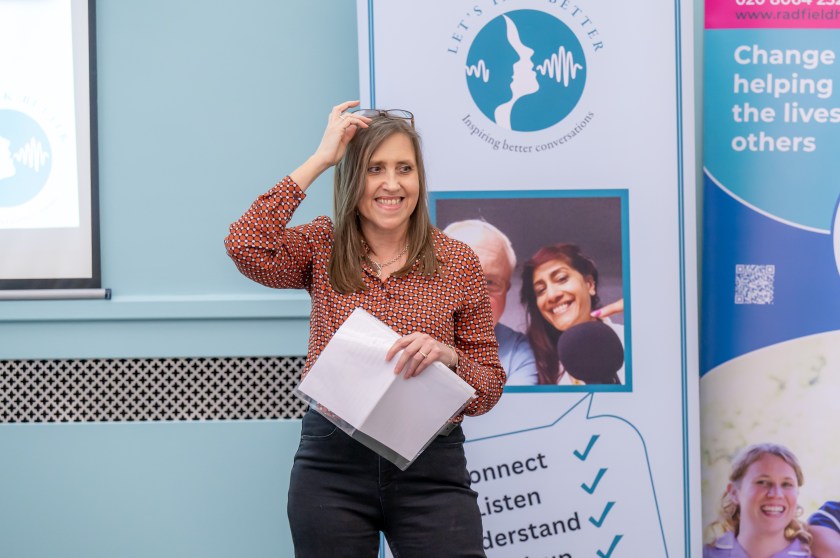
Back to our latest event. Firstly, thank you to Community House for the venue and all your support. Event compere and speaker Zeenat Noorani said, “We want to say a huge thank you to all those who attended, with special thanks to Simi Ghuman and Chanice Baugh of Radfield Home Care for sponsoring the event, and the amazing speakers who shared wonderful insights, as well as heartfelt personal stories that have impacted their mental wellbeing.
“Thank you to the Mayor of Bromley Cllr Mike Botting and MP Gareth Bacon for saying a few words and sharing some of your own personal insights. LTB is grateful for your support.”
It was wonderful to have Richard Cox of Richard Cox Wealth Management speak on Financial Distress and he gave some valuable tips on financial stress, how it happens, what looks like, and how to try to prevent it.
Suicide attempt survivor Nick Wilson drove all the way from Milton Keynes and met Zeenat for the first time in person (having been the first guest on her Mindset Matters Radio Show on Channel Radio). He spoke about how listening to lived experiences of mental health, disability and suicide helped to save his life and how he now helps people to share their own stories.
Neil Peters, Suicide Prevention Consultant, shared key information about identifying people with suicidal thoughts; how to offer support, listening tips, and what to say and do.
Two touching videos were specially recorded for and shared at the event. One by Mike McCarthy, co-founder of the Baton of Hope suicide prevention campaign, who told us about the loss of his son, Ross.
The other was by Steve Phillip, fellow co-founder the Baton of Hope, and his own cause, The Jordan Legacy, spoke about losing his son Jordan to suicide.
Zeenat spoke for the very first time in public about a part of her life where she fell pregnant and she almost took her own life. She reflected subsequently, “Vulnerability, though, and courage aren’t always comfortable, but they are never a weakness.”
We welcomed back singer-songwriter Oliver Anderson, who sang two beautiful and profound songs about toxic relationships, ‘Burning Leaves’ and ‘Surrender’.
It was an eventful day of emotions: highs, lows, moments of connection and moments of honest conversations, bringing a sense of relief to many. The day entailed some interactive activities, The Tree of Expression where attendees reflected on their thoughts and feelings, writing them on cut-out paper leaves to attach to the tree of that name. Inspired by Shauna Darling Robertson poetry for young people’s mental health, we all took part in contributing lines of verse to create a LTB cohort poem that will become our signature poem.
The Let’s Talk Better campaign aims to contribute towards creating a world without Taboos and Stigmas, where conversations are open on all topics. Join us on the 22nd of February 2024 for Let’s Talk Better’s One Year Anniversary, where light will be shed on how better conversations contribute to the hopes and successes of people’s lives.
 Let's Talk Better C.I.C