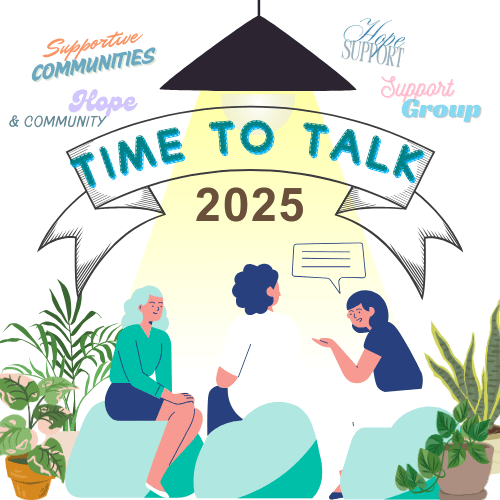
Every year, Time To Talk Day reminds us of the importance of open, honest conversations about mental health. The 6th of February is a day dedicated to breaking the stigma. It fosters understanding and empowers individuals to share their stories. People are also encouraged to listen to others.
What is Time To Talk Day?
Time To Talk Day was first launched in 2014. Mind and Rethink Mental Illness partnered with the Time to Change campaign. The goal was simple yet profound: to create a space where conversations about mental health are normalised and encouraged. By doing so, we can reduce the stigma and to ensure no one feels alone in their struggles.
Research consistently highlights the need for such initiatives. According to the Mental Health Foundation, 1 in 6 adults experiences a common mental health problem each week in England. YoungMinds reports that 1 in 6 children aged 5-16 has a probable mental health condition. These statistics underline the importance of creating environments where people feel safe to talk and seek support.
The Importance of Time To Talk
Mental health can affect every aspect of our lives. It influences our relationships and productivity. It also impacts our physical health and overall well-being. Time To Talk reminds us that mental health is just as important as physical health. Open conversations can:
- Break Down Stigma: Talking openly about mental health helps challenge stereotypes and misconceptions.
- Foster Connection: Sharing experiences can build trust and strengthen relationships.
- Encourage Help-Seeking Behavior: People are more to seek help if they feel their struggles are understood and validated.
Practical Tips for Meaningful Conversations
Want to support someone’s mental health or start your own journey toward better mental well-being? Here are some strategies:
- Create a Safe Space: Find a quiet, comfortable place where the person feels at ease to open up.
- Practice Active Listening: Be present in the conversation, make eye contact, and avoid interrupting.
- Ask Open-Ended Questions: Instead of “Are you okay?” try “How have you been feeling lately?”
- Avoid Judgment: Show empathy and refrain from offering quick fixes unless asked.
- Follow Up: Let the person know you’re there for them by checking in regularly.
- Share Your Own Story: If appropriate, sharing your experience can help normalize their feelings.
Let’s Talk Better C.I.C.: Supporting the Mental Well-Being of Communities and Opening up Conversations for All
As part of my mission to make a difference, Let’s Talk Better C.I.C. (LTB) a community interest company dedicated to improving mental health and well-being for children, young people, and adults. Through initiatives like the Let’s Talk Better campaign, we address key issues including anxiety, body image, identity, self-worth and suicide. We also focus on LGBTQ+, Neurodiversity, bullying, relationships, and many more important topics.
By providing workshops, resources, and open forums, Let’s Talk Better aims to:
- Equip individuals with tools to manage their mental wellbeing.
- Educate communities on the importance of empathy and understanding.
- Create spaces for authentic, stigma-free conversations.
We’re proud to collaborate with schools, parents, and mental health professionals to inspire a healthier, more supportive world.
Mental Health Statistics: Why This Matters
Mental health struggles are widespread and often underestimated. Here are some eye-opening statistics:
- Children and Young People: YoungMinds reported that 87% of young people said the cost-of-living crisis worsened their mental health.
- Adults: Mind reports that 25% of people will experience a mental health problem in their lifetime.
- Loneliness: A 2022 report by Campaign to End Loneliness revealed important findings. It showed that 45% of adults in the UK feel lonely occasionally, sometimes, or often.
These figures highlight the urgency of collective action to support mental well-being.
Resources and Hotlines
If you or someone you know is struggling, remember that help is available. Here are some valuable resources:
- Samaritans: Call 116 123 for 24/7 support.
- YoungMinds: Text YM to 85258 for free, 24/7 support from trained volunteers.
- Mind: Call 0300 123 3393 for information and support.
- Shout: Text SHOUT to 85258 for confidential support via text.
- Childline: Call 0800 1111 for free, confidential support for young people under 19.
- CALM (Campaign Against Living Miserably): Call 0800 58 58 58 for support for men in crisis.
Join the Conversation
Time To Talk Day is an opportunity for all of us to reflect on the power of talking and listening. Let’s consciously check in with ourselves and our loved ones. We should start those important conversations. We need to create a culture where everyone feels seen and heard.
If you’re struggling, please don’t hesitate to reach out. Whether it’s to a friend, family member, professional, or organisations like Let’s Talk Better C.I.C. or The Clarity Coach – Zeenat Noorani, help is always within reach.
Let’s talk better, together. Let’s create a world where difficult conversations are prioritised. These conversations become easier. No one should feel alone in their journey.
Call to Action: If you want to collaborate, seek support, or learn more about Let’s Talk Better, please reach out. Feel free to contact me – The Clarity Coach. / Director and Co-founder of LTB.
Together, we can make a difference.
Author: Zeenat Noorani
 Let's Talk Better C.I.C