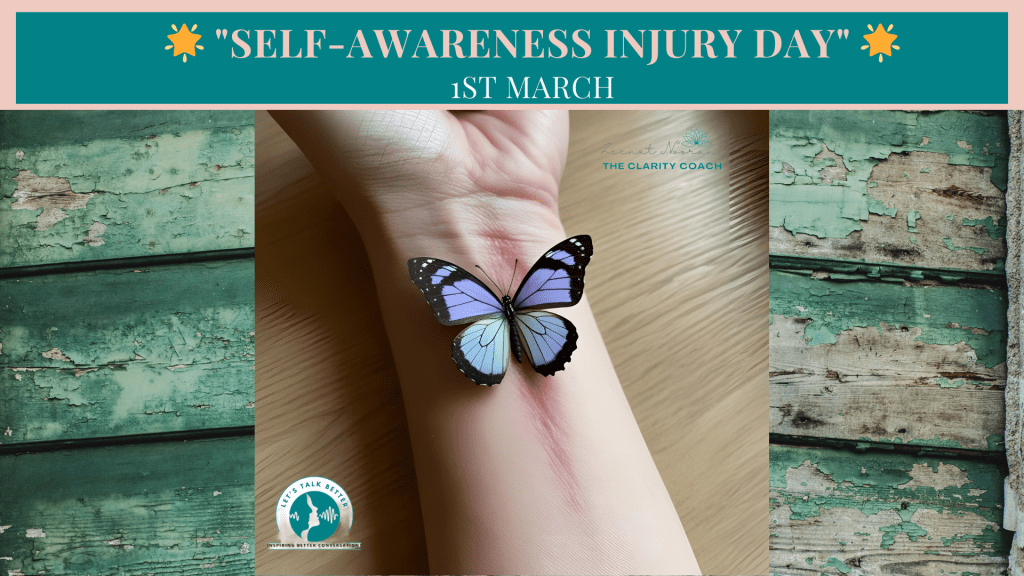
Image caption: The butterfly represents transformation, hope & the Butterfly Project a movement where individuals draw butterflies on their arms to resist self-harm.
Every year on March 1st, Self-Injury Awareness Day (SIAD) serves as a global movement to shed light on the realities of self-harm, break the stigma surrounding it, and encourage open, compassionate conversations about mental health. Self-injury, also known as non-suicidal self-harm (NSSH) affects millions of people worldwide, yet it often remains misunderstood and shrouded in silence.
Understanding Self-Injury
Self-injury involves deliberately inflicting harm on oneself as a way to cope with emotional distress. Common methods include cutting, burning, scratching, or bruising. Contrary to common misconceptions, self-harm is not necessarily a suicide attempt; rather, it is often a way to express emotions, relieve tension, or regain a sense of control. However, those who self-harm may be at increased risk of suicidal thoughts and require emotional support and professional intervention.
Why Awareness Matters
Stigma and misunderstanding often prevent individuals from seeking the help they need. Self-Injury Awareness Day aims to:
- Encourage open conversations about self-harm and mental health.
- Educate people on the signs, causes, and support options.
- Provide resources to those struggling and their loved ones.
- Foster empathy rather than judgment, so individuals feel safe reaching out.
How to Raise Awareness and Show Support
There are several ways to contribute to Self-Injury Awareness Day and support those affected:
- Wear an Orange Ribbon: The colour orange symbolises self-harm awareness. Wearing it can spark conversations and show solidarity.
- Share Information: Utilise social media to spread facts, stories, and resources about self-injury.
- Educate Yourself and Others: Learn about self-harm, its triggers, and recovery options to provide better support.
- Engage in Supportive Conversations: If someone opens up to you, listen without judgment and encourage them to seek professional help.
Recognising the Signs of Self-Harm
If you’re worried about someone, look out for these signs:
- Unexplained cuts, burns, bruises, or scars, especially on the arms, thighs, or torso.
- Wearing long sleeves or pants even in warm weather.
- Avoiding activities that expose skin.
- Mood swings, withdrawal from friends and family, or increased secrecy.
Tips for Parents, Carers, and Educators
Supporting a child or young person struggling with self-harm can be challenging, but early intervention can make a significant difference. Here are some essential tips:
✅ Stay Calm & Open – Reacting with shock or anger can push the child away. Instead, create a safe, judgment-free space for them to talk.
✅ Listen Without Judgment – Encourage them to express their feelings without rushing to “fix” the problem.
✅ Use Positive Language – Avoid phrases like “Why are you doing this?” Instead, say “I’m here for you, and I want to help.”
✅ Encourage Professional Help – Suggest speaking to a school counsellor, GP, or mental health professional.
✅ Teach Healthy Coping Strategies – Help them explore alternative ways to express emotions, such as journaling, art, mindfulness, or exercise.
✅ Work With the School – If you’re an educator, liaise with pastoral care or safeguarding teams to ensure the right support is in place.
A Message of Hope
“I understand how difficult this can be—I’ve been there myself, and I know others who have struggled with self-harm. But please know that healing is possible, and there is hope for a future where self-pain is no longer the answer.”
Self-Injury Awareness Day is not just about acknowledging the issue—it’s about breaking the silence, fostering understanding, and offering hope. If you or someone you know is struggling, remember that help is available, you are not alone, and healing is possible.
By raising awareness, supporting open conversations, and providing the right resources, we can work together to reduce stigma, promote mental wellbeing, and help those affected find healthier ways to cope.
UK Helplines and Resources
If you or someone you know is struggling with self-harm, there are dedicated support services available:
- YoungMinds Parents Helpline – 0808 802 5544 (Support for parents worried about a child)
- Childline – 0800 1111 (Confidential support for children and young people)
- The Mix – 0808 808 4994 (Support for under-25s)
- Samaritans – 116 123 (Available 24/7 for anyone in distress)
- LifeSIGNS – A leading self-harm support network providing guidance and peer support.
- Harmless – Offers information, training, and direct support services for those affected by self-harm.
#LetsTalkBetter LetsListen #TheClarityCoach #HOPE #copingstrategies #rasieawareness #SelfInjuryAwarenessDay #BreakTheStigma #YouAreNotAlone #MentalHealthMatters
Author: Zeenat Noorani -The Clarity Coach I Director & Co-founder Let’s Talk Better C.I.C

 Let's Talk Better C.I.C